Why Be Happy When You Can Be Normal?
Jeanette Winterson
London, Vintage, 2011, 230p
I have been rationing words on these last few days of my half term holiday. That is because I didn't want to rely on book swaps in hostels, since my luck with them proved to be limited. So over the last weekend of my adventure, I read and reread the Forward Book of Poetry 1994 (review coming soon), and I took my time enjoying Why Be Happy When You Could Be Normal?
Jeanette Winterson, author of Oranges Are Not The Only Fruit, is a clever and sharp writer, both of fiction and non fiction. I always find myself seeking out her commentaries in The Guardian and elsewhere, and everything I read leaves me feeling reassured that I am not alone, that life is a mad experience for all of us.
Why Be Happy? is the sister book of the semi-autobiographical Oranges: Winterson confesses that her 1985 novel brushed over some of the harsher realities of her upbringing, including the creation of Elsie, the saviour of Oranges who makes Jeanette's harsh upbringing slightly softer. In reality, there was no Elsie. Winterson's childhood was full of explicitly repressive religious doctrine and nights locked out of the house, camped on the doorstep, as punishment for some odd crime, like reading.
Despite only having six books in her house growing up, Winterson could not help but fall in love with words. She hid books under her mattress and learned stories by rote, just so she could indulge in the magic of literature and poetry. Her love for language is infectious, and by the end of the memoir I had a long list of things I wanted to read or return to.
She also explores the challenges of suffering from depression, and explains the reality of finding her birth mother - a muddle of difficult administrative procedures resulting in a reunion she feels is rather less dramatic than typical reunion stories.
What touched me most was Winterson's process of coming to understand her approach to love and relationships. Her feelings towards her adopted mother are impressively positive; she finds herself coming to the defense of Mrs Winterson whilst it is clear that her child-raising techniques were somewhat unconventional. And this has had an interesting effect on Winterson's adult life - in particular, the feeling that she is not wanted and does not deserve to be loved in the way many others think of being loved.
This is the first book I have read more than once in years (other than Persuasion), and definitely the first book I have ever read when I started from the beginning again as soon as I had finished. It added something to the reading process that I have never experienced before - a feeling of familiarity, as I read words and scenes I had already stored in my memory, but some scenes shifted and altered as I read them a second time.
And I think this made me love Jeanette Winterson's writing even more - she could make me laugh when I already knew the punch line; she made me put the book down and think about what I had just read; and when I knew what was coming later, I could see elements of her future being shaped in her youth.
There was so much going on in this memoir, I do not have the space to explore it all in this blog, but it goes without saying that I think everyone should read this. Winterson's story makes it okay to be who you are, and I think we all need to be reminded of that every now and then.
My Swordhand is Singing
Marcus Sedgwick
London, Orion, 2006, 194p
I have finally been able to return to the realms of the Gothic - horrah!
Peter lives in the a small village, on the edge of the woods, with his father. Both are woodcutters, though with his old age setting in and his reliance on alcohol, Peter's father does not contribute much.
Chust is the first village Peter and his father have settled in for some time, having previously preferred to be on the move. Peter is glad of the respite, happy to be falling for the prettiest girl in the village; but he is conscious that everything is not as it seems. There is talk of dead husbands returning to their wives, and as winter draws nearer, the superstitious townsfolk take to decorating their homes against the Shadow Queen.
My Swordhand is Singing is packed full of drama and drowning in Gothic horror. The whole of my English department love him, asking every year if I can get him to visit for World Book Day (no luck yet! - he's a busy man). This novel is part of the year nine curriculum at OSA, and I am always impressed by the number of students who come looking for further Sedgwick reads.
Invisible Girl
Kate Maryon
London, HarperCollins, 2013, 255p
Kate Maryon is a brilliant realist writer, engaging with challenging subjects in an informed and sympathetic manner. Her latest novel, Invisible Girl, is about children who run away from home.
Gabriella has a horrible new stepmother who has taken over the house. Her dad is letting Amy walk all over him, and only Gabriella can see things will not end well: she is worried they will spiral into debt like they have in the past. Then one day, she finds Amy packing a bag for her, telling her that her father and stepmother are going away and Gabriella has to go and stay with her mother in Manchester. In one moment, she's lost her home, her friends and her family, and is bound towards a mother who still haunts her nightmares.
Unsure of where to go, Gabriella ends up on the streets of Manchester. She befriends some children who live on the streets, hiding with them from the police, all of them too scared to go home. There are many reasons why these children are on the streets, though most of them keep pretty quiet about it.
Gabriella ends up in trouble due to her new associations, who have to resort to disruptive behaviour and petty theft for entertainment. Reading from Gabriella's point of view, you sympathise with the children, lost and alone, constantly scared and in danger. Gabriella is a big-hearted, kind young girl, and, at only twelve years old, it is distressing to read about her plight.
Maryon's novel is supported by the Big Issue Foundation and Railway Children, charities for homeless children who have slipped through the gaps. You are forced to think differently when reading Invisible Girl, as it challenges many of the assumptions people have about the homeless. It is an upsetting read, and yet I would undoubtedly recommend it to any young reader.
The Bell Jar
Sylvia Plath
London, Vintage, 2005, 234p
I have a whole lotta love for Sylvia Plath, despite her reputation as being rather depressing. I first read The Bell Jar during A-Level for my coursework, for which I set about on a focused study of the themes of the novel, with a particular emphasis upon gender. It has been such a long time since I read it that it felt like reading it for the first time, and again I savoured every minute.
Esther Greenwood is spending a summer in New York, having won a writing scholarship to work at a reputable fashion magazine. Holed up in a female-only hotel full of fellow winners, she is trying to make the most of this opportunity, but finds herself overwhelmed by the hypocrisy of world in which she finds herself. On returning to suburban Boston, Esther is exhausted but completely unable to sleep, and spirals into depression as she contemplates her future prospects.
First published in 1963, The Bell Jar outlines the plight of the educated, middle class young woman in a society with offers limited opportunities outside domesticity. Esther is surrounded by women who work under the thumb of powerful men or gave up their jobs to marry. When she thinks of her future, she knows that whatever decisions she makes will cut off a hundred other opportunities, and she finds herself unable to act. The feeling of completely lack of control overwhelms Esther, making her feel stifled and suppressed, like she is trapped beneath a bell jar.
Reading today, with a better understanding about mental health, the story of Esther Greenwood is disturbing and frustrating. She finds herself isolated, unable to talk to anyone about how she feels; and when she tries to explain, she is patronised and mocked. Contemporary treatments included electroconvulsive therapy, a traumatising experience that offers no solution to Esther's feelings.
The story is thought to be semi-autobiographical, with Esther's life unfolding in a similar way to Sylvia Plath's. But I always felt this novel was more universal than that, appealing to many young people, growing up unsure of what lies ahead.
But there is such beauty in Esther's sorrow. The imagery she uses is profoundly unique, demonstrating the complexity of the depressed mind. It is almost as if she sees more than the rest of us, and this deep awareness sinks her into melancholy. The Internet is flooded with meaningful quotations from the novel, adopted by readers as a reflection of their own lives.
Reading this again, I was able to distance myself from Esther's story, whereas I used to read too deeply into it and relate it to my own life. Now, I am able to note the beauty in the melancholy, seeing the nuances of the language and the detail in the images. For me, this novel is not a sad one, but one of incredible originality, poignancy and beauty.
Drawing a Veil
Lari Don
London, Bloomsbury, 2012, 61p
Amina and Ellie are best friends. But when Amina turns up at school wearing a head scarf, Ellie is confused. Is Amina different now? Does this change their friendship?
Drawing a Veil is a brilliant short read - appropriate in content for teenage readers, but adequately accessible for students with limited vocabulary. It does not patronise, but discusses serious issues faced by teenagers every day.
Amina is a confident, self-assured protagonist; but her friend Ellie questions her motives for choosing to wear a hajib. Amina breaks down her reasoning, offering the reader a simplified understanding of the choices available to young Mulsim women.
This is the sort of story that would appeal to students at my school due to the diversity of our intake. And as well as being a great story, it is educational and moral.
 If I Stay
Gayle Forman
London, Black Swan, 2009, 250p
The concept behind this novel is unbelievably tragic. From the wreck of her parent's car, Mia can see her broken body being held together by the paramedics. She knows she is hurt, but cannot feel it; instead, she watches from the outside as her life falls apart and her friends and family pray for her recovery.
Based on true events, this novel is a spiritual exploration of the thin line between life and death. It asks difficult questions about what it means to lose everyone you love and how you are meant to live when life alters irrevocably.
If I Stay is also a novel about music - it has it's own soundtrack. Mia is a cellist and her family and boyfriend are ardent rock fans. Music runs throughout the novel, from the moment the accident occurs, drawing out memories and emotions, sometimes long forgotten.
Memory is an important theme in this novel. As her body tries to recuperate, Mia's spiritual other dreams of the past - of meeting her boyfriend, of laughter shared with her family. The use of different tenses is brilliantly emotive - sometimes, the memories are written in present tense, as if Mia is experiencing things that happened long ago for the first time. And particuylarly poignant is when Mia refers to her mother in the past tense, slowly coming to terms with what has happened.
I have mixed feelings on finishing this novel. I loved reading it - so poetic and musical, intricately composed. But it was the kind of book that should have made me cry and, strangely, I shed not one tear.
If I Stay
Gayle Forman
London, Black Swan, 2009, 250p
The concept behind this novel is unbelievably tragic. From the wreck of her parent's car, Mia can see her broken body being held together by the paramedics. She knows she is hurt, but cannot feel it; instead, she watches from the outside as her life falls apart and her friends and family pray for her recovery.
Based on true events, this novel is a spiritual exploration of the thin line between life and death. It asks difficult questions about what it means to lose everyone you love and how you are meant to live when life alters irrevocably.
If I Stay is also a novel about music - it has it's own soundtrack. Mia is a cellist and her family and boyfriend are ardent rock fans. Music runs throughout the novel, from the moment the accident occurs, drawing out memories and emotions, sometimes long forgotten.
Memory is an important theme in this novel. As her body tries to recuperate, Mia's spiritual other dreams of the past - of meeting her boyfriend, of laughter shared with her family. The use of different tenses is brilliantly emotive - sometimes, the memories are written in present tense, as if Mia is experiencing things that happened long ago for the first time. And particuylarly poignant is when Mia refers to her mother in the past tense, slowly coming to terms with what has happened.
I have mixed feelings on finishing this novel. I loved reading it - so poetic and musical, intricately composed. But it was the kind of book that should have made me cry and, strangely, I shed not one tear.
The Outsiders
Michelle Paver
London, Penguin, 2012, 291p
Stuck on a train, this might not be the first book I would have chosen to have with me. But as fate would have it, The Outsiders was the only novel I remembered to pack. Fortunately, it did not disappoint.
Michelle Paver's novel is set in Greece in the Bronze Age. It's pages seep with mythology and legend. Gods watch over the land and the people, superstition and magic are everywhere, and society is structured by ancient rules and traditions.
Hylas and his sister are separated when they are attacked by the Crows - a deadly group of warriors seemingly pent on killing Outsiders, or those who are not part of the villages. Searching for his sister, Hylas finds himself in ever growing danger, always stalked by the Crows. But he is intelligent, brave and patient, better equipped than anyone to survive in the wilderness.
Meanwhile, Pirra is trying to escape her mother and the fate that awaits her when they reach land: marriage. She is stubborn and ruthless, determined to run but unsure where to go. Stranded together on a desolate island, Pirra and Hylas must work together to avoid capture and find their way to safety.
This novel is the first in a new series by Michelle Paver. What I find so frustrating about such a series is that you feel incomplete when you reach the end of the first part - I prefer stories to begin and end within the confines of one book. Of course the cliffhanger is designed to keep you wanting more, but this novel in particular left me feeling like the story was barely started. So much happened, but you know there is so much more to come.
Within this novel, I went on an incredible journey - back to ancient Greece, down to the depth of the ocean, into the darkest caves. The land is a character, beautifully vast and powerfully enticing. For me, I think feeling like I was there with Hylas and Pirra is what made this novel something special.
Butterfly Summer
Anne-Marie Conway
Londo, Usbourne, 2012, 251p
I am still crying as I try to compose this review. What a masterpiece of teenage fiction. I not even halfway through the 2013 Bookbuzz list, but I think I have found a favourite.
Butterfly Summer came to my attention a few months ago when it won the Oxfordshire Book Awards. Becky and her mum have moved to Oakbridge, where Becky's mum lived before she was born. Becky has the whole of the summer to find her way around before she starts a new school, and her adventures lead her to the Butterfly Garden where she meets Rosa May. Together, they are determined to seek out the infamously evasive Silver-studded Blue, a butterfly that is incredibly rare and full of mysterious hope.
But as they spend more and more time together, the friendship between Becky and Rosa May gets increasingly complex, as the latter becomes clingy and aggressive. At home, Becky's relationship with her mother becomes strained as Becky starts to feel like she is keeping secrets. All around her, people seem to be hiding things and acting weird, but revealing the truth is never as easy as it should be.
This is such a brilliantly engaging, intelligent and exciting novel. It is so accessible, with language that lights up the pages. The Butterfly Garden is a beautiful space in which Conway explores the young girls' friendship; but even the most idyllic spaces can have a dark side.
It is here that Conway really excels. She gently lays the foundations for a thrilling, emotional story about how one can never really hide or forget the past. As you read, the story reveals itself to you, just as the secrets slowly reveal themselves to Becky.
Butterfly Summer is the perfect novel: the right length and pace; the right mix of drama, descriptive language, mystery and horror; and a brilliantly composed plot. I am in awe of Anne-Marie Conway.
The Fat Black Woman's Poems
Grace Nichols
London, Virago, 1984, p85
I have opened this collection several times over the course of the last couple of weeks, searching for and finding new meanings and details with every read.
The Fat Black Woman's Poems is a refreshing and challenging look at the world through the eyes of Grace Nichols. It consists of four different collections, each with a different tone and theme running through. The first is the title collection - a series of passionate poems, sometimes angry, sometimes comic, about the experiences of a fat black woman. She contrasts ideas of Western beauty with images of African culture and climate. Nichols isn't resentful or self-loathing, but joyous and confident, full of the wonder of womanhood. She is proud.
The collections that follow are similarly loud. Some are about London life, set in conflict against her African heritage. Some are about family and friends, full of affection and admiration. And some are political, exploring the history of black lives, from slavery to racism and everything surrounding these subjects.
I love Grace Nichols confidence. She is strong and brave, and her power is perpetuated through her words.
This is an inspiring collection, both in terms of its subject and its form. Nichols is unconventional, refusing to conform to standard rhyme, structure or language. But in this way, she demonstrates that poetry can be whatever you want it to be.
Sky Hawk
Gill Lewis
Oxford, OUP, 2011, 226p
This was an unexpectedly enjoyable book. I had not anticipated where the plot would take me, and it was refreshing to read an original story about wildlife.
The Sky Hawk is an osprey named Iris, a rare migrating bird found by two children in the highlands of Scotland. Iona and Callum promise to keep their discovery a secret from anyone else, knowing that it would endanger the life of their beloved new friend. But things do not go to plan, when they find Iris caught by a fishing wire, close to death. They have to enlist the help of some trusted adults, who place a tracker on the bird, so the children can follow her flight south for the winter, over the mountains of France, across the Sahara desert, into The Gambia.
This journey was the element of the novel I had not predicted - I find that many teenage novels can be plotted fairly easily within the first few pages, so it was brilliant for this story to take me somewhere new. The first 60 pages do not lead you to guess that you will later be flying over north Africa with the bird.
The story is told through Callum, who remains in Scotland, tracking the flight via the Internet. Whilst Iris flies, Callum searches for pictures to get an idea of what she sees as she travels. The journey is perilous, but Callum and Iris have a special link, and he strives to keep his promise to protect her.
The way in which the characters come together for the osprey is incredible and inspiring. This novel is uplifting, both in terms of the story and the language. Callum's farm is a magnificent sight brought to the reader by vivid description and imagery, whilst The Gambia is seen through the pictures Callum finds online, and later by a pen pal who also takes an interest in the bird.
Sky Hawk is an uplifting novel because of the way it demonstrates the good in people. It is about more than an animal, more than nature - it is enjoyable because it is about humanity.
Oranges Are Not The Only Fruit
Jeanette Winterson
London, Vintage, 1990, 171p
Oranges are not the only Fruit was a novel my friend chose to write on during A-Level. (I chose The Bell Jar.) I remember promising her I would read it after our exams, once life settled down; but things happened and I forgot. For years, I have seen it in bookshops, libraries, charity shops, and sworn I will get around to it, and finally, now, I have fulfilled that promise.
Jeanette Winterson's novel professes to be a love story. For me, it was more of a journey. It is a sort-of-autobiographical account of growing up in a Pentecostal Christian household, whilst coming to the realisation that she is a lesbian. It is about self-discovery, happiness, and the importance of family. It is about being okay with being undefinable - no one can be wholly good or wholly evil. Sometimes, we are who we are.
Her loneliness is touching and reassuring. Jeanette feels like an outsider in a world of religious rules and oppositions. She cannot comprehend how her sexuality makes her a bad person, when her destiny is tied up in missionary work. Her journey is about understanding herself, breaking down the false barriers represented by binary labels of good / bad or right / wrong. It is not an everyday story, but the feelings are shared by many.
Winterson walks a delicate line between criticising the narrow-mindedness of religious obsession and preaching about the love of God - I was so impressed that she managed to not take a side. She draws on her knowledge of Christianity, using Biblical language and religious themes to tell her story, but also brings in other folk tales and legends. As such, the line between fiction and non-fiction is blurred (like I said, sort-of-autobiographical!).
It was this questioning of "truth" that I particularly adore about Jeanette Winterson. There is a chapter in the middle of the novel (a chapter I loved so much I read it twice) in which she explores the idea that history is determined by the story-teller. Reality is therefore malleable and subjective, and as readers, we must be contentious. We listen and we learn, and we weave our own ideas about what is the truth.
The Amber Spyglass
Philip Pullman
London, Scholastic, 2000, 548p
This is the final novel in the His Dark Materials trilogy. It has taken me longer to read than the previous two for a number of reasons, but not least because it is the most complex and philosophical of the series.
The Amber Spyglass is the climax of a conflict that have been building throughout the trilogy. We rejoin Will, seeking to be reunited with Lyra after their separation at the end of The Subtle Knife. Together, they are a great power, a team built on friendship and understanding. Together, they are confident they can do what they have to do, even if they are not yet sure what that is.
As readers, the journey we go on with Will and Lyra is dangerous and fascinating. We explore unimaginable worlds, where strange creatures roam and dark forces overwhelm good. We see the world of the dead, where the ghosts of many species wait in misery for who knows what. Lyra and Will bring light to these worlds, striving to do good. For the ghosts, they open up a window to allow them to escape out to nature, becoming one with the world:
"All the atoms that were them, they've gone into the air and the wind and the trees and the earth and all the living things. They'll never vanish. They're just part of everything."
Suddenly, for the characters and the reader, death seems less scary, more hopeful. This is the sort of hope that I can relate to.
Pullman has been challenged by some religious groups for the atheist themes in his novel. As a piece of teenage fiction, some of the subjects explored are difficult for young people to understand - even I struggled in places. He is an intellect and proud of it, littering his pages with references to literary greats, from John Milton to William Blake (causing me to dig out my old Blake anthology - what beautiful poetry!). But beneath his anger against organised religion, Pullman creates a beautiful world, where hope and humanity are victorious over greed and power.
Cloud Atlas
David Mitchell
London, Sceptre (Flipbacks), 2011, 854p
Flipbacks are my new favourite thing. For those who don't want to lug around a hefty novel whilst travelling, but don't want to succumb to the new technological era, these small, lightweight publications are a perfect alternative. Who would have thought I could carry Cloud Atlas in my pocket!?
Cloud Atlas is a tome of genius and creativity - an 800 page novel narrating six different interlocking lives, across many centuries. With each story, the style, tone and pace changes, keeping the reader on their toes. The stories are split, so the narrative is disjointed and, sometimes, I struggled to remember the smaller details, especially as I have been reading it over a long period of time.
But I love the unique nature of each of the lives - it is incredible that Mitchell is so flexible and creative, offering such variety whilst maintaining a narrative flow. For example, the first story is written in the form of a diary, as Adam Erving tells of his adventures at sea; then it is the correspondence of a young composer, Robert Frobisher, writing to his friend Sixsmith whilst lodging in Bruges (my personal favourite). There are movie scripts and interviews, as well as a section that is written like spoken word - as Zachry tells his story to a listening crowd. In the first few pages of each section, you have to take a moment to readjust, but soon you begin to drown in the language and imagery, and most significantly, the characters.
Throughout, the characters are linked by memory, mythology, and a comet-shaped birthmark. Frobisher tells Sixmith that he is reading the diary of Erving; and later, Luisa Rey seeks out Frobisher's Cloud Atlas Sextet, after meeting Sixmith and embroiling herself in a dangerous mystery. Elsewhere, Somni 451 (a clone, who draws suspicion for being more intelligent than she was manufactured to be) becomes a deity in the distant future, after the Fall of civilisation. In this way, each character keeps the memory of the previous character alive.
The overarching theme of greed and power, leading to destruction, subtly seeps into the reader's subconscious. Unfortunately, I felt the novel lacked the big ending I felt it deserved. But each narrative highlights the evil of greed, and the consequences of power structures - from the feminist undertones in Luisa Rey's story, to overt slavery, both in Erving's historical narrative about colonisation and Somni 451's experience as a clone in the future. In the distant future is a dystopia in which man has reverted to an ancient state, living like cavemen, due to the internal combustion of the greedy civilised world.
I cannot recommend this book enough, both in terms of it's originality and literary beauty. It's length might seem put some people off, but it is definitely worth it to escape into these incredible worlds and fascinating lives. And with Flipbacks, you don't even have to carry around a huge copy!
(I should really be getting paid to say these things.)
In Darkness
Nick Lake
London, Bloomsbury, 2012, 333p
My Carnegie journey has come to an end with this brilliant story of tragedy and death. It has been a brilliant experience, but I am so glad I am not responsible for choosing a winner.
Simultaneously telling the story of a young boy trapped under the the rubble of the 2010 earthquake in Haiti, and the battle for liberation of the Haitian slaves under Toussaint L'Ouverture in the 18th century, In Darkness is a heart-breaking novel. I knew very little about the history of Haiti before reading this story, but now desire to know more. The story is about struggle against oppression, the fight for freedom and the desperation caused by imprisonment, both for black slaves under French rule, and young gangsters in the slums of Port-au-Prince.
Also, perhaps because I just read it, I saw some parallels between this story and Midwinterblood. Both authors explore the possibility of souls being able to survive throughout time, living through different bodies, seeing the world through different eyes. In Lake's story, both Toussaint and Shorty share the same soul, and in their dreams, they see the lives of others who have lived before and will live after them.
The story of the slave uprising is incredible, though Nick Lake admits he may have sugar-coated some of the events. Toussaint is an inspiring leader, preferring to maintain the land and spare the lives of the masters where possible. He doesn't want revenge, he just wants freedom; but death is a price that sometimes must be paid.
The young modern protagonist is an endearing character - misunderstood, scared, and desperately missing his twin sister, he joins the Route 9 gang in order to get revenge on the men who killed his father. He helps deal drugs and punish those who don't pay up. He admits he felt that rush when killing people, but you understand why - he has no money, no family, and little hope of escape from the slum. His best hope is to find a place within the street gangs. They respect him, and fear him; they believe he is blessed by the gods.
Vodou is a significant theme in this novel - both stories massively revolve around the belief in symbols, idols and magic. Men follow Toussaint because they believe he is possessed by the spirit of the lwa (deity) of war, and the gangstas trust Shorty because he is a twin and carries a pwen, a small stone containing the spirit of the lwa.
This novel is dark both metaphorically and literally, and the theme of imprisonment is recurrent. Trapped under the rubble after the Haitian earthquake, most of the story is told by a young boy trying to stay sane. He is imprisoned in his underground cave, like Toussaint is imprisoned by the laws of slavery and the racist assumptions of the white. The parallels between the lives of the two character, living over two hundred years apart, are full of darkness, sadness, and death. And yet, it is incredible how you forgive them both their wrong-doings, as you hear the story from their perspectives. Nick Lake makes you think about heroicism - he makes you question yourself and what you would do if you were them. Unfortunately, I fear many of us could never be so brave.
Midwinterblood
Marcus Sedgwick
London, Indigo, 2012, 263p
This is an incredibly dark, brilliantly Gothic novel. I have not read something so scary in some time, and I loved the feeling it gave me. Sedgwick defines the Gothic genre in it's modern form, and Midwinterblood is a fabulous example of his skill.
Written in reverse chronological order, this is a story of life, death, and love. It is set on Blessed Island, so far north the sun rarely sets. Mystery envelopes the island, as folk lore suggests that the people here never grow old, fueled by a unique healing plant, the Blessed Dragon Orchid. In 2073, journalist Eric Seven arrives there to learn more, but gets the feeling he has been there before.
It's really hard to write about this book without giving too much away, but let me just say that this novel contains several interlinked stories with recurring characters. It looks at the journey of two souls across many centuries, constantly searching for each other, wanting to be together.
That's the romantic aspect, but the part I loved the most was the Gothic themes. So far from the real world, Blessed Island is eery and mysterious - all is not as it seems. Characters keep popping up, they feel like they recognise each other, even though they cannot possibly have lived that long. Sedgwick plays with the idea of life eternal, both in the literal sense, with those characters who consume the Dragon Orchid, and in terms of eternal souls, with the souls of Eric and Merle finding each other throughout the centuries, despite the odds against them.
This novel took me back to the Gothic literature I studied at university - Poe, Hawthorne, Henry James. The suspense and drama are perfectly choreographed, taking the reader back in time, developing completely realistic worlds in each setting. Sometimes, I had to flick back through the pages to remember who was who, but I loved the slow revelation of the truth through the darkness of the story. At the end, everything came together, and all I want to do is read it again - I know it will reveal more to me with each re-reading.
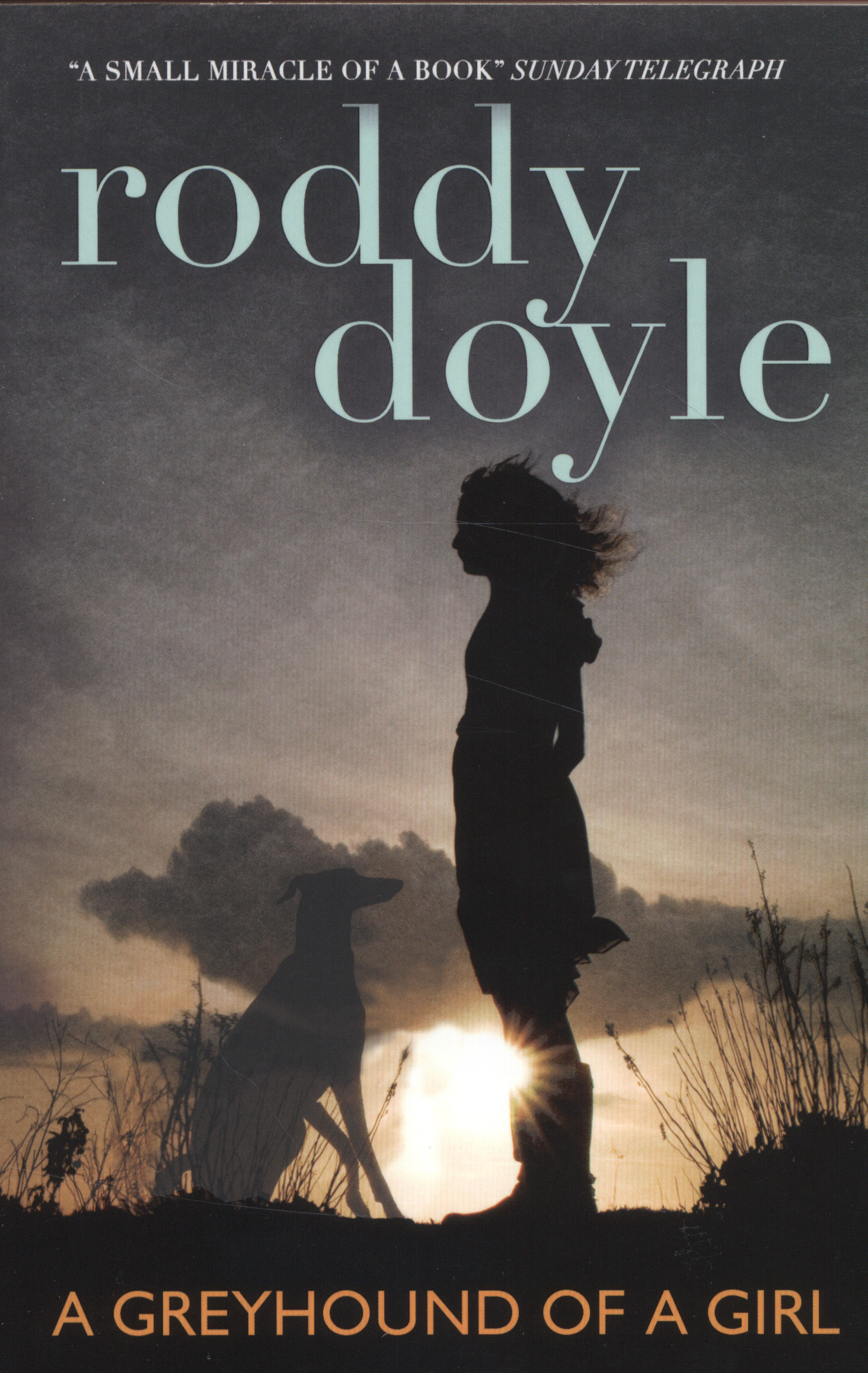
A Greyhound of a Girl
Roddy Doyle
London, Scholastic, 2012, 168p
I regret attempting to read this novel on a train. Public spaces are the worst places to cry. This beautiful story left me with emotionally wrought but strangely comforted.
A Greyhound of a Girl is about four generations of women dealing with death. Mary hates visiting the hospital, where her grandmother, Emer, is staying; until one day a ghostly stranger tells her to tell her grandmother that it is going to be okay. Together, the women help Emer deal with what is to come, as they look back on childhood memories and the challenges of motherhood.
Mary is a sweet little girl, full of sarcasm and intelligence. She a self-conscious ten-year-old, in that place between innocence and maturity, full of hope for the future and fear of losing her youth.
It is set on the east coat of Ireland, just south of Dublin, with a typically Irish family set up, as you would expect from Roddy Doyle. Having visited the area just last summer, I was disappointed that the novel lacked detailed descriptions of the surrounding scenery. Maybe it is too brilliant to put into words.
The novel would be a brilliant book to offer a young girl facing the challenges of a death in the family, as it dispels that fear of the unknown. It is slow-paced and gently emotional, written in fairly childlike language. The themes are heavy, but are presented with care and sensitivity - a brilliant Carnegie nominee.
In the Trees
Pauline Fisk
London, Faber & Faber, 2010, 337p
It's less than a week until World Book Day and therefore less than a week until Pauline Fisk comes to visit my school. I've been saving this book for a while, as Pauline spoke so enthusiastically about it; and I have to agree it is wonderful.
In the Trees is about a young boy's search for somewhere to call home. Kid grew up in South London, his mother passed away when he was young, and he does not know anything about his father except he is from Belize. Dropping out of school, Kid flies to Belize to search for his father, following strange trails through the rain forest in his quest. He encounters dangerous people, supernatural myths, and makes amazing friends.
Poverty is a theme that pervades throughout the novel - both in terms of financial poverty and emotional poverty. Kid is the sort of young man who has slipped through the social services net, and is outside the attention of those institutions that should be there to help him. He feels that growing up in South London has prepared him well for the threats that await him in South America; but he finds the culture is so different, and he discovers a poverty like nothing he has experienced.
And yet the people he meets are full of love and hope. There is change in the air, as a new government is elected, full of promise. People only use what they need, and only have very little. But they appreciate it.
When Kid starts out, he seems to be completely lost. He doesn't have a home in South London; he has no family and few friends. He is half Belizean, but still feels slightly put of place when he travels there. He wants to learn about his heritage and his father, in the hope he will better understand himself and where he belongs.
The novel is very enlightening. Fisk's descriptions of the rain forest are vivid and beautiful, taking you right into the jungle with the young characters. It makes me want to go out there. The story is long but gripping, full of twist and turns and new adventures. Kid is a brilliant character, and particularly appealing for those with little sense of self. He grows and develops, becoming self-aware enough to recognise that, even as the novel ends, his journey is not yet complete.
Everything Beautiful
Simmone Howell
London, Bloomsbury, 2008, 277p
Everything Beautiful is set at a Christian camp in Australia. Riley is sent there by her parents, and is very reluctant to participate. She is an angry young woman, who has recently lost her mother, and now has to deal with an unwanted stepmother.
But she is not the boring, moody, rebellious teenager you find in so much teenage fiction. She knows the difference between right and wrong, and, more often than not, does follows the good path. She feels guilt and takes responsibility for her actions, sometimes as well as the actions of others in order to protect her friends. Her
deviance comes in the form of sex and smoking, but it seems as if she does these things in order to find a place in society and find a release for her confusion. She does not act out of spite.
The religious elements are thankfully subtle. She does not undergo some dramatic conversion from athiest to Christian - the development of her character is more meaningful than that. Faith and spirituality presents itself in the form of friendship. On arrival at the camp, Riley is determined not to participate, and unwilling to make friends. She even has an escape plan, to get back to her home for a friend's party. But friendship creeps up on her, and she finds herself surrounded by support and love.
The novel is realistic, not your typical over dramatic teenage angst story. Riley is resentful of religion, but this is not exaggerated beyond belief. Her narrative voice is witty and emotional, making use of teenage slang and other terminology. I was expecting a religious conversion; but the story is believable, her development is natural, and the ending is optimistic.

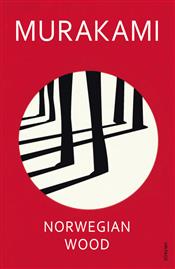
Norwegian Wood
Haruki Murakami, trans. Jay Rubin
London, Vintage, 2003, 386p
I want to read this book again and again and again. It is a beautiful masterpiece of love and loss and friendship. It is gripping and clever and emotional. It's the kind of book that will reveal more and more with each read.
Toru Watanabe stumbles across his past when he stumbles across his best friend's girlfriend in Tokyo. He is a thoughtful, quiet, intelligent young man. Increasingly, he finds himself spending more and more time with the beautiful, delicate Naoko, wandering through the streets with her.
Norwegian Wood reminded me of when I studied performance theory at university - the theory that our identities are performed, chosen by us depending on our situations
and surroundings. One of Murakami's characters, Midori, performs her
identity like she is on stage. She is outgoing and sensual; no, sexual. She speaks her mind, but seems to be pretending to be embarrassed by this. During a fight with Watanabe, she refuses to speak to him, but later explains she wanted to punish him, and she really missed him, too.
The story is written from a narrative that looks back, almost twenty years. Watanabe questions his memories as he writes, trying to recall and identify the truth. An important theme is that of mental health. Many of the characters suffer at varying levels, but this novel asks what is normal. One scene I found particularly effective - on a visit to a psychiatric house, he commented that he couldn't tell who were doctors and who were patients.
The novel is very literary, by which I mean it has subtle underlying meanings, both metaphoric and symbolic. The descriptions throughout are detailed and visual, taking you right to the heart of Tokyo. Each word feels like it was chosen for a specific purpose.
I love novels like this. I feel truly touched by it, and inspired. It is not a clear cut romance, but has depth and meaning. It is full of literary magic - the characters comment that they love the way Watanabe speaks, and I do, too. Although not explicitly, he grapples with the definition of love, and is haunted by the memory of his mistakes. It is a novel about real life.
This blog post is for Sam, as a belated thank you letter.
A Gathering Light
Jennifer Donnelly
London, Bloomsbury, 2003, 398p
I started this book blog because I am a rather forgetful person. I like almost anything I read - I have had complaints that these reviews aren't particularly critical, and that I never have a bad thing to say about the books. That's because I appreciate the fact that someone has taken the time to create something for me. I admire that. This blog isn't critical because it is for my own benefit - if anyone else enjoys it, that makes me very happy - but I read so much that I often forget what I have read, even if I can remember that I loved it.
A Gathering Light: case and point. I read this novel last year, as it was on the Carnegie medal in 2003 - as part of my MA in Librarianship, we were discussing the formula for an award-winning piece of children's literature. And Jennifer Donnelly has it down to a fine art form.
But when I recommended it to a student this morning, I found myself at a loss as to why I had loved it last year. So after a quick skim read (and a more detailed read of my favourite parts), here is a summary of my thoughts.
This novel is the story of Mattie, who I adore. She is a masterpiece in the form of a teenage girl; she is unbelievably real. She is a young girl torn between obligation to her family and her desire to get away to be educated in the big city. She is equally smart and loyal; but she struggles to know which path is the right one for her.
Mattie's story is paralleled by the story of Grace Brown, whose body is found in the river that runs through Mattie's town. Mattie finds Grace Brown's letters, written to her lover in the build up to their elopement. A tragic tale unfolds, with Mattie as the witness.
Throughout the novel, Mattie is learning new words, which she shares with her family and with the reader. I learnt a lot of incredible language. Mattie is supported by her school teacher, Miss Wilcox, who dreams of seeing Mattie in New York City at school. Miss Wilcox is also encouraging Mattie's best friend Weaver to go off to school - Weaver is an African-American boy who is brilliant at maths. She is an inspiring teacher, willing to believe that these children can achieve anything they want to. She gives them private tuition, and allows Mattie to borrow anything from her vast library.
This award-winning novel has everything. It is has friendship, family and romance. It has hard decisions and everyday drama. It has comic characters, to lighten the load. It has an incredibly heroine, surrounded by brilliant friends and teachers who help her find her way.
But best of all, it was realistic, timeless, a classic. It speaks to me, despite being set over 100 years ago. I relate to Mattie, even though she is only 17 years old. I understand the difficulties she faces, having made similar decisions in the past. And I hope the student I recommended it to, currently deciding what to do with her future, will also take something meaningful from Jennifer Donnelly.