Showing posts with label class difference. Show all posts
Sunday, 1 March 2015
How to Build a Girl
How to Build a Girl
Caitlin Moran
I had almost neglected to write this review, seeing as it has been so over-reviewed already, but when I saw a friend reading it and laughing all the way through, I felt the need to offer my thoughts.
All those who know Caitlin Moran know her story by now - a clever girl raised on a council estate who lands a teenage writing prize and goes on to blag a column in The Times. Moran insists that How to Build a Girl is fiction, but it is hard to distance this novel from her own reality.
But it is not the plot of this novel that I want to celebrate, rather the little snippets of hilarity that are simultaneously completely familiar and obsurely unique. The teenage self-consiousness that convinces Johanna Morrigan she is singularly responsible for her family's poverty. The misreading of social convention that makes dressing solely in black seem like the best idea, and her mother's concern that she is acting like a dark crow that has decended upon the household. The naivety that allows her to have so much sex and so few orgasims.
Whether or not you like that fact that Moran seems to only write about one thing, you cannot deny the fact that she is honest, realistic and frankly hilarious.
Sunday, 17 August 2014
Breathe

Breathe
Sarah Crossan
London, Bloomsbury, 2012, 371p
I have been trying to read this for the last few days, with little success. I am unsure if it is because it is the holidays and I have switched off, or because the book isn't all I wanted it to be, but I have not gotten very far.
One hundred pages in, the characters are introduced and the plot is established, but I am not gripped. Alina, part of a rebel group, is forced to escape the city in which she has always lived. Here, oxygen is a gift, divided according to a strict social divide, which leaves many without enough air to lead a normal life. The state is catching up with the rebel group, and Alina must get away. On the city borders, she is helped by a Premium boy, one of the rich and fortunate, and together they escape into the unknown outside the Pod.
Already, the path of their story seems clear, paralleling many of the tropes of the multitude of other dystopian novels currently available. On reading the blurb, I loved the concept of this novel, but the initial pace felt slow and I could not engage with the characters and their trials.
Perhaps I just need a holiday and will return to it in the future.
Saturday, 9 August 2014
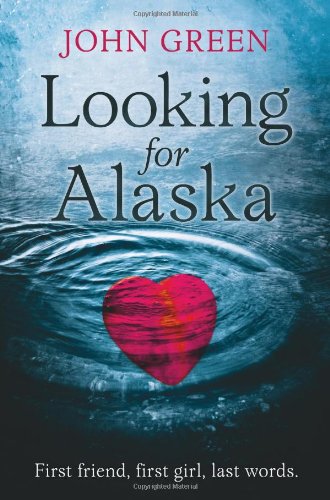
Looking for Alaska

Looking for Alaska
John Green
London, HarperCollins, 2006, 263p
John Green's style is becoming increasingly popular - the awkward young protagonist meets the girl / boy of his / her dreams, and their soul mate is charmed by their strange quirks and skinny frame. Romance ensues, with elements of uncertainty and a comic best friend helping bring the couple together. A happy ending is not guaranteed, but the reader is promised a slither of hope as they read the final pages.
Miles falls for Alaska the moment he meets her. She is beautiful, curvy and confident; he is lanky, awkward, and can recall the last words of almost anyone. Alaska has a boyfriend who she professes to love, so Miles must settle for being her friend. He has moved schools, looking for the Great Perhaps - that opportunity to do more with his life than he had previously been experiencing. He makes friends, pulls pranks, and gets drunk, but his love for Alaska never deteriorates.
Looking for Alaska is a sweet and zany romance. It's target audience - those teenage misfits that so love John Green - will find quotes to treasure and moments to relate to. Initially, I found myself engrossed with Miles Halter - I understood his low self-esteem and satisfaction with his own company, conflicting with his desire to find a group with which to fit in. Unlike many high school romances, John Green does not transform his characters in any profound or physical sense; essentially, they find ways to love themselves through friendship (and often some mild drinking).
But as with many other John Green novels I have read, I identified more with the comedy sidekick than the main protagonist. The Colonel, as he has named himself, is a trailer park boy with brains, awarded a scholarship into the academically aspirational Culver Creek. He is resentful to many of the posh kids at school, but makes himself the class clown, determined to get thrown out of every basketball game for causing a ruckus. And there was also Takumi, who plays a more quiet supporting role. These two are the glue which bring Miles and Alaska together and bind the whole story.
It is clear why John Green's writing has become so popular; and, like The Fault in Our Stars, Looking for Alaska is shortly going to be made into a movie. However, I do find that I need long gaps between reading his novels - the formula is so perfect it becomes predictable, and I need something completely different for my next read.
Friday, 18 July 2014
The Invention of Wings
Sue Monk Kidd
Tinder, 2014, 410p
I received this book some months ago as a free proof via Twitter from the wonderful people at Tinder publishing. I love Sue Monk Kidd, having read The Secret Life of Bees in my teens whilst studying the slave trade - it added a personal, emotional element to my understanding of the suffering and desperation of those who were victims of slavery.
The Invention of Wings is a story told by Sarah Grimke, the daughter of an aristocratic landowner, and Hetty Handful, a slave of the Grimke household. When Hetty is given to Sarah as a present, Sarah tries to give her back, uncomfortable with the idea of owning another person. She is a forward thinking and ambitious young girl, determined to follow her father into the legal profession. But her parents refuse to accept her liberal ways, and bestow Hetty upon Sarah anyway. Sarah tries to be kind to Hetty, but sometimes finds slavery too ingrained in her way of life. Hetty, meanwhile, tells us the story of her mother and her grandmother - how their talents as seamstresses have helped them become house slaves, rather than those who work the fields. Yet, Hetty's mother has a streak of danger running through her blood, and her attempts to defy their masters and liberate themselves from slavery end in the harshest of punishments.
As the two girls grow older, their paths diverge, but their stories remain intertwined. Sarah becomes an advocate for the abolition cause, talking at meetings and writing pamphlets with her sister, Nina, eventually stumbling upon the suffragette cause when their public speaking becomes suppressed by their gender. And Hetty continues to work for the Grimke family, but continues to dream of freedom.
In her closing note, Sue Monk Kidd informs her reader that the story is based on a true story - that of Sarah and Angelina Grimke, sisters who fought for abolition and suffrage, tending against their Southern upbringing. Much poetic license has been used, including Hetty's life, adding an element of contrast to the story of the wealthy white woman. The author brings in much historical information, adding volume and texture to her account of life in nineteenth century America.
And the writing is simply beautiful - within the first few pages you have been transported back two hundred years, and you can see every detail, every stitch that Hetty sews. One line that particularly stood out for me was towards the end of the book, where Hetty describes her aged mistress: "She has lines around her eyes like dart seams and silver thread in her hair, but she was the same."
Their stories are of hardship and tragedy, but their hope is uplifting. Sue Monk Kidd notes that the records show that Sarah was more reluctant about some of her actions than this novel suggests, but in a time when it must have felt like the whole world was against them, I consider Sarah's bravery and Hetty's determination to be inspiring.
Sunday, 25 May 2014
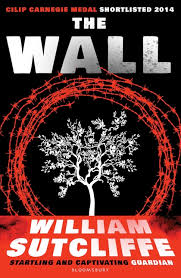
The Wall
The Wall
William Sutcliffe
London, Bloomsbury, 2014, 286p
I have been very slow about making my way through the Carnegie shortlist this year, but have stepped up my game this half term with The Wall.
Joshua has lived alongside the wall for many years, with a vague awareness of what might be on the other side. One day, he discovers a tunnel that leads to the other side, a forbidden territory for people from his side of the wall. There, he finds terror, violence, and kindness, and his newfound knowledge changes his life forever.
The Wall is a dark, dangerous novel about segregation. Sutcliffe has created a ficitonal world losely based on the Israeli settlements on the West Bank, and he explores the issue of racial prejudice that is ingrained in this and so many other areas.
The journey of discovery that Joshua embarks upon is full of danger and pulls his already fragile family unit apart. Joshua's father passed away in a military incident relating to the wall, and his stepfather is a brute, angry force. Joshua tries to bridge the gap through helping those who showed him kindness, but is simply punished and rebuked by his family. Those on his side of the wall are protected from the dangers and repression, but what he sees when he discovers the tunnel can never be unseen.
William Sutcliffe
London, Bloomsbury, 2014, 286p
I have been very slow about making my way through the Carnegie shortlist this year, but have stepped up my game this half term with The Wall.
Joshua has lived alongside the wall for many years, with a vague awareness of what might be on the other side. One day, he discovers a tunnel that leads to the other side, a forbidden territory for people from his side of the wall. There, he finds terror, violence, and kindness, and his newfound knowledge changes his life forever.
The Wall is a dark, dangerous novel about segregation. Sutcliffe has created a ficitonal world losely based on the Israeli settlements on the West Bank, and he explores the issue of racial prejudice that is ingrained in this and so many other areas.
The journey of discovery that Joshua embarks upon is full of danger and pulls his already fragile family unit apart. Joshua's father passed away in a military incident relating to the wall, and his stepfather is a brute, angry force. Joshua tries to bridge the gap through helping those who showed him kindness, but is simply punished and rebuked by his family. Those on his side of the wall are protected from the dangers and repression, but what he sees when he discovers the tunnel can never be unseen.
To see the rest of my Carnegie reviews, click here.
Tuesday, 20 May 2014
A Streetcar Named Desire
Tenessee Williams
London, Methuen, 2009, 90p
What I like most about reading a play is that it can so often be done in the space of a day. And in that time, with a play like A Streetcar Named Desire, you can go from the comfort of your living room to the streets of Louisiana.
Blanche DuBois is visiting her sister, Stella, and her new husband, Stanley. She is a fragile, dreamy woman who is shocked to find her sister, once a Southern belle, is living in a dingy flat in New Orleans. To Blanche, Stanley seems aggressive and common, but Stella is smitten, and though they fight often and loudly, they make up with sweet kisses and tenderness. But the addition of Blanche to Stanley and Stella's household puts a strain on the couple, and it becomes increasingly apparent that Blanche may not be telling the truth about her visit.
Tenessee Williams' play is gritty and dramatic, contrasting Stanley's rough manners with Blanche's fragile state of mind. To Stanley, Blanche appears to be a compulsive liar, though she is suffering from mental health problems and seems to have a fantastical way of rationalising her past.
After I read the book, I watched the 1951 movie with Vivien Leigh and Marlon Brando, which added another level of depth and drama to the play. Brando's performance - borish and sensual - is the complete antithesis of Leigh's scatty and angelic Blanche. And between the two sits the marvellous Kim Hunter (Stella), torn between sister and lover.
Plus, Brando is incredibly hot.
Tenessee Williams
London, Methuen, 2009, 90p
What I like most about reading a play is that it can so often be done in the space of a day. And in that time, with a play like A Streetcar Named Desire, you can go from the comfort of your living room to the streets of Louisiana.
Blanche DuBois is visiting her sister, Stella, and her new husband, Stanley. She is a fragile, dreamy woman who is shocked to find her sister, once a Southern belle, is living in a dingy flat in New Orleans. To Blanche, Stanley seems aggressive and common, but Stella is smitten, and though they fight often and loudly, they make up with sweet kisses and tenderness. But the addition of Blanche to Stanley and Stella's household puts a strain on the couple, and it becomes increasingly apparent that Blanche may not be telling the truth about her visit.
Tenessee Williams' play is gritty and dramatic, contrasting Stanley's rough manners with Blanche's fragile state of mind. To Stanley, Blanche appears to be a compulsive liar, though she is suffering from mental health problems and seems to have a fantastical way of rationalising her past.
After I read the book, I watched the 1951 movie with Vivien Leigh and Marlon Brando, which added another level of depth and drama to the play. Brando's performance - borish and sensual - is the complete antithesis of Leigh's scatty and angelic Blanche. And between the two sits the marvellous Kim Hunter (Stella), torn between sister and lover.
Plus, Brando is incredibly hot.
Sunday, 20 April 2014
To Kill a Mockingbird
Harper Lee
London, Arrow, 1997, 309p
I first read To Kill a Mockingbird in my teens, but a few weeks ago, when I saw the 1962 movie, I realised I couldn't remember anything about the book. So, whilst I holidayed in Hamburg this week, I picked up the classic and once again sank deep into the world of Scout and Jem.
Scout and Jem are adventurous and curious children, but always stay within the limitations set by their househelp, Calpurnia, and their father, Atticus Finch. When they start hanging out with a boy called Dill, the children start pushing the boundaries of the rules, and seek out to lure their reclusive and potentially dangerous neighbour, Boo Radley, from his house.
Meanwhile, Atticus is involved in a controversial case in court, defending a black man against the charge of the rape of a white girl from a poor family. All through town, Jem and Scout are subject to comments from classmates and neighbours, and Scout has to work hard to control her feisty temper and keep out of trouble.
The relationship between Atticus and his children is something to be admired. They adore and respect him, despite some people outside the family thinking he lets them run wild and is bringing Scout up to be less than feminine. But Atticus feels safe and comforting; he is a brilliant role model, combining the right amount of intelligence, comedy and love.
There is so much going on in To Kill a Mockingbird that I feel this blog does not give me the space to explore all the themes and storylines. I think my favourite element is Scout's narrative - young and sometimes naive, but always ready to learn and to try. She is inquisitive, always asking questions of her father that even he sometimes struggles to answer, and she loves her older brother even when he is growing into a young man and his hormones start to take over. Her world view is optimistic and vulnerable in equal measure, but through Scout, we see the evil in poverty, racism and domestic abuse, and understand how a little love can go a long way.
Labels:
bildungsroman,
class difference,
classic,
courts / law,
crime,
drama,
family,
friendship,
funny,
girlhood,
heroines,
historical,
love,
morality,
prejudice,
race,
school,
social welfare
Friday, 7 March 2014
British

Weird World of Wonders: British
Tony Robinson
Basingstoke, Macmillan, 2012, 156p
I had thought this new series of non-fiction books for children might have been similar to the Horrible Histories collection, and was setting myself up for the same format, when in fact it was oddly different, and I cannot pinpoint exactly how.
This Weird World of Wonders book is about the British, charting the history of the Empire from it's rise in the Victorian era to it's fall in the last one hundred years. Weirdly, this book begins by talking more about the Spanish than the British, but Robinson does explain why this is. There is a lot of information in this little book with pages crammed with drawings, jokes and facts.
But it does not have quite the spark of so many of its contemporaries. The comedy is rather too much like dad jokes, and there are no little diversions and snippets of fun facts. Unlike some similary non-fiction books, a young reader could not jump in and out, as the information is too linear.
I think a lot of interesting things are happening in the world of non-fiction for young readers, and this does not engage with some of the best methods and tropes available, despite offering some brilliant factual information.
Monday, 24 February 2014
Dodger
Dodger
Terry Pratchett
Corgi, 2013,
I blame my father for my love of Terry Pratchett.
Dodger, however, is no typical Pratchett. It is about a street boy with a big heart, who knows the sewers like the back of his hand. When he rescues a young girl from being beaten, he becomes involved with the hoi polloi of London, with whom he sets out to understand how this girl has ended up in this situation
It isn't Discworld, and it is written for a younger audience. This story is historical, very thoroughly well-researched, and explicitly Dickensian. The novel reads very much like a Dickens novel, with summaries at the start of each chapter, lots of old Victorian slang, and the exploration of social issues such as poverty and children's education. And on top of that, Charles Dickens himself is a main character, eager to turn Dodger's life into one of his best sellers.
The novel is funny and light-hearted, even with it's moral message about social inequality and related injustices. Dodger is a brilliant protagonist, impressing everyone with his fast thinking and integrity. He's the kind of guy anyone would be lucky to know.
But I feel unsure about the target audience for this novel - without a good knowledge of the context, it might be lost on the younger reader, whilst many adult readers adore it!
Last year, I saw Dodger adapted for the stage by the Studio Theatre Club in Abingdon, and both my dad and I loved it. It had been long enough since then that the story felt somewhere between returning to an old friend and reading something new. Dodger is a fairly niche novel, but I imagine lovers of Dickens and lovers of Pratchett will find something to enjoy here. And I am a lover of both.
Friday, 27 December 2013
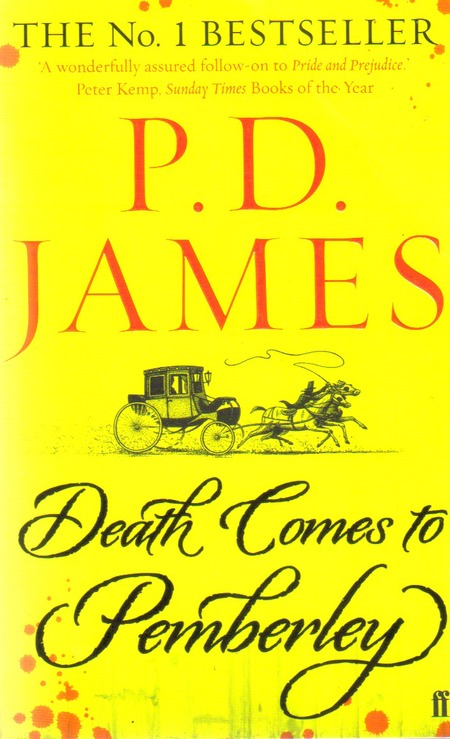
Death Comes to Pemberly

Death Comes to Pemberly
P.D. James
London, Faber, 2011, 324p
My second piece of meta fiction in as many book reviews, but unfortunately is one was somewhat less satisfactory than the last. Eager to stick to my rule about reading the original before watching the adaptation, I wanted to read Death Comes to Pemberly before the BBC version reached my screen this Christmas, aired over three consecutive evenings.
We are reunited with Janes Austen's infamous Bennett family, six years after the marriages of Darcy and Lizzie, and Jane and Bingley. The Darcys are planning the annual ball, supported by their abundant staff at Pemberly, when Lydia draws up in a carriage, declaring her husband has been murdered in the woods. Darcy sets off to find out what really happened, embroiling himself in a scandal that will dig up hidden secrets and and well-repressed feelings.
As I have noted before, some meta fiction simply makes you want to repeat the original. Unfortunately, this was not one of those sequels,: although I love the concept of a murder mystery containing all my old favourites, I felt James was unable to write the see characters as well as Jane Austen once did.
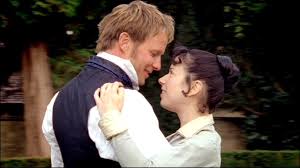
And now, seeing the adaptation on screen, it is clear that the concept it pure genius, mixing classic romance and drama with contemporary demand for crime fiction. In the BBC version, we are one again shown those characters we so greatly loved. Darcy is stubborn but noble, sometimes misguided in his actions but always acting with the best intentions. Lizzie is intelligent and observant, and proving to be a brilliant mother and wife. Lydia and Mrs Bennett (although not in the book) return, as hysterical and ridiculous as ever. Jane and Georgiana add a touch of feminine sensibility to the whole party, and Georgiana's suitors vie respectfully for her attention. And, to top it all off, Wickham brings drama and controversy to the peaceful existence of the Darcy home.
But the book didn't bring any of this delight for me. I found the plot confusing and convoluted, unnecessarily jumping between characters, time and settings. Often, James' use of unclear pronoun was frustrating; for example she'd start a paragraph talking about two male characters, and continue the paragraph using just "he", leaving the reader confused about who was being discussed. As such, the revelation towards the end gave me no thrill, feeling instead like a necessary process I had to go through just to make it to the end.
I found myself ploughing on, hoping for more, which I eventually found in the television adaptation. I think this might be the first time I've preferred the screen to the book! Hopefully, this novel will not put me off reading any P.D. James in the future.
Thursday, 5 December 2013
Persuasion
Persuasion
Jane Austen
London, Penguin, 2007, 272p
My book hangover is cured!
If anyone was going to fix me, it had to be Jane Austen. Persuasion is my all time favourite book. It is like comfort food to me - warm, relaxing, like spending an evening with an old friend. I have read it a million times, and every time I have laughed and cried and gotten heart burn from forgetting to breathe.
When the lives of Anne Eliot and Frederick Wentworth cross again, eight years after she was persuaded to break off their engagement, neither can be sure what the other now feels. Anne is a gentle, intelligent and practical young woman; modest and quiet unlike her humoursly self-centered family. And Wentworth is noble and agreeable, bursting with emotions but terrible at revealing them.
So like every other perfect couple in history, they convince themselves that the other no longer loves them. Frederick's friendly attention to Anne's nieces convince her that he must love another; and her determined modesty makes him believe she could never return his affections. Oh, why don't they just tell each other!?
And this is exactly why I get heart burn. Austen writes so well - building the suspence, carrying the novel through stolen glances and mistaken actions. I find myself drawn right into the room with Anne and Wentworth, watching their every move, trying to be patient, knowing they will come together eventually.
I have oodles of respect and love for Jane Austen. She is so clever and timeless. Her characters are vivid and true - we all know someone like the people in this story. And the locations remain alive today, places like Bath and Lyme Regis, still classically regent. This book mocks the foolish ignorance of the upper classes, challenges the percieved differences between the sexes, and celebrates the sensibility of educated women.
But the most incredible element in this novel is that letter - Captain Wentworth's confession. I can say no more; you must read Persuasion to understand.
Tuesday, 26 November 2013
The Making of Us
The Making of UsLisa Jewell
London, Random, 2011, 390p
I think I am still a little hungover from reading William Boyd's Any Human Heart, meaning I have been unable to settle into any other novel since I finished his masterpiece. So I went in search of something a little more simple, to get my mind back in the game, and was recommended a bit of Lisa Jewell.
In various places across London, Dean, Robyn and Lydia know something is missing from their lives. Young Dean has just become a father, but has lost his girlfriend in childbirth, and he does not feel strong enough to give his daughter all the love and attention she needs. Robyn has just moved in with her boyfriend, but isn't feeling as awesome as she usually does. Lydia never had any family, and is now struggling to be happy with the fact her best friend is starting one of her own. The Making of Us is about these relationships between parents and children, brothers and sisters. And, in classic popular literature fashion, the three protagonists are all brought together by a mysterious and handsome French man.
I read and loved Lisa Jewell when I was a teenager - I remember recommending Ralph's Party to everyone I knew, though now I cannot even recall what it was about! With The Making of Us, I found myself wanting to edit it - making cuts to long unnecessary paragraphs. But still, I like her style and tone - the plots are not too challenging, but the stories and characters are likeable, so you find yourself wanting things to end well.
Fingers crossed this has cured my William Boyd hangover.
Labels:
class difference,
death,
drama,
family,
friendship,
girlhood,
love,
memory,
orphan
Tuesday, 24 September 2013
After Tomorrow

After Tomorrow
Gillian Cross
Oxford, OUP, 2013, 296p
England is in recession. The banks have collapsed and money is tight. Some families are managing, with careful planning and vigilant forethought; but some are suffering, driven to drastic measures by desperation.
Does this sound familiar?
How about late-night attacks from the poor, venting their anger through theft - trying to level the playing field by stealing from those who have more? How about being forced to emigrate to France as England becomes increasingly dangerous and impossible to live in?
This is After Tomorrow - a "what if" story. What if the recession got worse? Matt and his brother, Taco, have to leave the home they know and love in a final rush before the border into France closes. They have already lost their father and their grandfather, victims to the violence that has erupted as a result of the poverty that has swept through England. But things are not much better over the channel: holed up in a tent, they live off food rations, shivering through the cold nights. Plus, neither of them speak French.
I breezed through this book - it felt effortless and confident, brilliantly composed. Although it is not an action packed novel, the pace was controlled perfectly, which meant I never got bored (even in the early pages as the character and plot was developed).
And the concept is simply genius, especially considering the target audience. Gillian Cross does not preach about class divide or make suggestions about the world economy, but presents a world that no child would want to experience. Without wanting to spoil the ending, I will just say that there is no conclusion to such a situation; but Cross does not patronise her reader or her characters: simply, After Tomorrow is thought provoking, intelligent and relevant, subtly guiding young readers to think about the world in which they live.
Sunday, 22 September 2013
The Outsiders

The Outsiders
Michelle Paver
London, Penguin, 2012, 291p
Stuck on a train, this might not be the first book I would have chosen to have with me. But as fate would have it, The Outsiders was the only novel I remembered to pack. Fortunately, it did not disappoint.
Michelle Paver's novel is set in Greece in the Bronze Age. It's pages seep with mythology and legend. Gods watch over the land and the people, superstition and magic are everywhere, and society is structured by ancient rules and traditions.
Hylas and his sister are separated when they are attacked by the Crows - a deadly group of warriors seemingly pent on killing Outsiders, or those who are not part of the villages. Searching for his sister, Hylas finds himself in ever growing danger, always stalked by the Crows. But he is intelligent, brave and patient, better equipped than anyone to survive in the wilderness.
Meanwhile, Pirra is trying to escape her mother and the fate that awaits her when they reach land: marriage. She is stubborn and ruthless, determined to run but unsure where to go. Stranded together on a desolate island, Pirra and Hylas must work together to avoid capture and find their way to safety.
This novel is the first in a new series by Michelle Paver. What I find so frustrating about such a series is that you feel incomplete when you reach the end of the first part - I prefer stories to begin and end within the confines of one book. Of course the cliffhanger is designed to keep you wanting more, but this novel in particular left me feeling like the story was barely started. So much happened, but you know there is so much more to come.
Within this novel, I went on an incredible journey - back to ancient Greece, down to the depth of the ocean, into the darkest caves. The land is a character, beautifully vast and powerfully enticing. For me, I think feeling like I was there with Hylas and Pirra is what made this novel something special.
Thursday, 15 August 2013
1984

Nineteen Eighty-Four
George Orwell
London, Penguin, 1989, 326p
Some reviews are extremely difficult to compose: sometimes because the book is pretty rubbish and I have to formulate an articulate way of saying why I didn't enjoy it; but sometimes because the novel is so complex that it takes a while to develop a succinct commentary.
The story of 1984 is so well known it is hardly worth repeating, but in case you have just stumbled upon the Internet because of exchanging a mobile phone for safe passage across the bridge you live under: Winston Smith lives in a dystopia in which your every movement and thought is scrutinised. It is 1984, and the world is split into three states, Oceania, Eastasia and Eurasia, each vying for power. But Winston has his doubts; he sees through the brainwashing, past the unnecessary war: he sees the structures of power and the manipulation of the everyman.
When Winston encounters Julia, he finds love and peace. Julia is a rebel, subtly defying the rules and expectations outlined by the state. She offers him companionship and a feeling of belonging, and finally Winston sees a way out a way to help a rebellion and create equality.
Some books change you as you read, and I wish I had read this when I was younger, as I might have known less about it and been more open to its effect. And yet, I still found it incredibly invigorating - it angered and inspired me. I felt like Orwell's language was alive, seeping into my subconscious, shaping my thoughts. Although it was a criticism of the society in which Orwell lived, the subject is timeless and universal, exploring the evil of social power structures and greed.
Big Brother is a terrifying concept, watching you all the time; and yet this is the society in which we now live. The power held by a minority is overwhelming, and the extent of their exhortation of the masses is incredible. It is brainwashing to the highest level, with documents being destroyed and history being altered. (As a librarian, this is my worst nightmare!) But as it is happening on such a large scale, I struggled to comprehend how the deception could succeed. Even though much of the written information was being corrupted, those doing the corrupting had to be aware of what they were doing and what the original documents stated, so should have been capable of doing something. But even this Orwell has thought of, and has introduced the concept of doublethink, a concept that feels almost impossible to explain. Perhaps I shall leave that to Orwell and make you read it.
Whilst 1984 scared and angered me, it also made me feel very lucky. Oceania is a dystopia, and however much it reflects contemporary reality, it is not real. In theory, it still could become our reality - Orwell was writing in the 1940s about a future he feared might develop, and of course it still could. What would be fascinating would be to know what Orwell makes of our world now. I speculate he would not be best pleased.
Friday, 2 August 2013
Theodore Boone

Theodore Boone
John Grisham
London, Hodder, 2011, 263p
John Grisham writes teenage fiction! Who knew?!
Though I have to admit, I have never read any of Grisham's adult fiction.
But I loved Theodore Boone. He is a young wannabe lawyer, who gets caught up in the biggest criminal prosecution case that has ever come to his home town. It is the murder of Mrs Duffy, and her husband is the prime suspect. A few days into the trial, new evidence finds its way to Theo - he promises to protect his source, but does not know how to get his evidence noticed without breaking his promise.
Theo is well known throughout the Strattenburg courts. Both his parents are lawyers - his father in real estate and his mother in divorce - and he is friends with bailiffs, cops and judges. Whilst in eight grade, he hands out free legal advice to his classmates and teachers, and helps his Government teacher with his lesson planning.
The murder case is the talk of the town, and Theo manages to get his class front row seats. He keeps abreast of all that is happening through his connections and seems to know more about law than the lawyers. Theo is the perfect protagonist - intelligent, moral, and pretty popular, having helped almost everyone he knows with one thing or another.
I do not want to spoil the ending, so cannot give much away, but there are a lot of loose ends at the end of this novel. I know there are more novels in this series, but with so many unanswered questions, I feel this book does not stand alone very well.
Also, I would like to have seen more of April, Theo's closest friend (but not his girlfriend, Grisham is cautious to distinguish). Perhaps she will appear more in the next novel.
I would definitely recommend Theodore Boone. Although it is American, and therefore some of the legal terminology does not apply in the UK, I found everything to be explained clearly. Theo is an smart kid, and he avoids legal jargon for his young clients and readers. But most significantly, I really liked Theo. He wasn't too clever or too moral; he was normal. He felt real.
Monday, 22 July 2013
Suffragette
Suffragette: The Diary of Dollie Baxter, London, 1909-1913
Carol Drinkwater
St Helens, Scholastic, 2003, 224p
The 'My Story' series tell the tales of a number of historical events through the eyes of fictional contemporaries. The series includes accounts of the reign of Bloody Mary to the voyage of the Mayflower. This particular story is about a young teenage girl's experiences of the Suffrage movement in the beginning of the twentieth century.
Dollie Baxter is thirteen years old in 1909, when her benefactor passes away and she is left unsure of what her future holds. She was born and raised in the dockyards of London, an area of poverty and destitution, but was rescued by Lady Violet and placed in education. Now, she depends on the goodwill of Lady Violet's granddaughter, Flora, who is a suffragist, socialising with the most famous names in contemporary culture and feminism. Through Flora, Dollie learns what suffrage is all about,and joins the Women's Social and Political Union, the more radical, violent branch of the suffrage movement.
Although Dollie is a fictional character, she interacts with many people who were prominent members of society at the turn of the century. She crosses paths with feminist leaders, from Emily Wilding Davison to Christabel Pankhurst. She attends dinner parties alongside George Bernard Shaw and Katherine Mansfield. Reading this novel is like walking through a classy soiree of celebrities. Dollie's guardian is well connected, granting her the opportunities to be better educated, more aware, and to move up in the world.
However, since Dollie was born working class, she continues to carry the burden of her heritage. In the upper class London society, she is aware of the vast differences between herself and her friends. Her fight for equality is rooted in her past, as she fears what would have happened to her had she not been taken in by Lady Violet. Seeing her mother so dependent upon her father, she believes education and employment as the only way to free women from the power men. Her plight differs from that of her rich friends, as she acknowledges how lucky she is to have such opportunities.
But then, when she goes home to visit her mother, she finds anger and resentment awaiting her. Her mother refuses to accept charity from her wealthy daughter, and is reluctant to encourage her in the suffrage movement. And her siblings envy her, mocking her posh accent and well-to-do dress. Dollie is in-between, never fully belonging.
I think it can be really difficult to engage young people in history. With so many facts and figures and little link to our reality today, the subject can seem distant and unimportant. Of course, history teaches us valuable lessons, but if you have little history yourself, how can you be expected to appreciate how past experiences can help us in our future decisions and prevent us from repeating unnecessary mistakes? These fact-based stories, with young fictional protagonists surrounded by historical fact, offer a route into history for young people. Students need to be aware that they are not 100% accurate, but they will support their curriculum-based learning and hopefully fuel their interest to research further.
Tuesday, 16 July 2013
The Collected Dorothy Parker

The Collected Dorothy Parker
Dorothy Parker
London, Penguin, 2001, 610p
I first came across Dorothy Parker a few years ago at a Dead Poet's Slam, in which people performed the poems of their favourite deceased writers. Her poems were sharp and witty, full of cynicism and anger, but not ranting-and-raving anger, but a more poignant and observational social critique.
This collection includes Parker's poems, short stories, and journalistic writings. Her style is singular and her tone is unique. In the introduction to this collection, one particular phrase stood out: "the imagination of disaster". By this, it is implied that she always manages to see the worst in things, as all her stories end badly. It is suggested that Parker did not think she would live as long as she did: in an age when all young female writers seemed to die prematurely, Parker lived to the ripe old age of 73. The theme of death, particularly suicide, is prominent throughout her poems ans stories, in which many of her characters are angry, lonely or depressed.
Most of these works were written in the 1920s, a time in which anything seemed possible. There were riches, sex and parties: the American Dream. But nothing was ever enough, and Parker highlights people's dissatisfaction with this world, anticipating the crash of the 30s. Her stories are about people who are lonely and confused, always wanting: wanting for their absent lover, wanting for a fur coat like the one the neighbour has, wanting for more of this or less of that. These characters turn to gossip, alcohol or extra-marital sex. They crave meaning and purpose, but always seem to be unable to find that fulfillment.
And yet, her language and descriptions are so captivating and addictive that I found myself in love with the beauty in the world, rather than lamenting the problems in it. Her stories are magnificently visual, and in just a few pages, you become engrossed in these worlds, intrigued by these people. For example, in one story, she describes a women as such:
"She was tall, and her body streamed like a sonnet. Her face was formed all of triangles, like a cat's is, and her eyes and her hair were blue-grey."There is a beauty to this language that is unprecedented. Parker's humour is sharp and observational, drawing your attention to some of the most common-place things and making them entertaining:
"Men seldom make passes / At girls who wear glasses."And that is the whole poem. Two lines: just brilliant. Though I think my favourite poem is Observation, because it perfectly encapsulates a thought I have almost every day.
Her tone and wit continue into her journalistic writing: reviews, commentaries, columns. It is like she is sat across the table from you in a coffee shop, telling you about the play she saw last night, laughing at the unconvincing acting or praising the audience's reaction.
I really enjoyed reading these stories and poems over the last few weeks, and I am ashamed I knew so little of her before now. Parker's stories end in tears or death - none of them offer the that fairytale happy ending - but they are real and honest, a criticism of the time in which she lived. She was a rare literary beauty, and I am glad she was an exception of her generation and lived long enough to give us such a vast and entertaining collection of writing.
Monday, 8 July 2013
Agnes Grey

Agnes Grey
Anna Bronte
London, Penguin, 1994, 302p
When it has been some time since I last read a book, I often find I cannot fully remember the plot, but I remember the impression it left upon me. This is the case with The Tenant of Wildfell Hall by Anne Bronte, which I must have enjoyed as I think of so fondly. However, this is my first reading of Agnes Grey.
This novel, Anne's first, is based on her experiences as a governess. As her family has so little money, Agnes volunteers to leave home and take a position tutoring two young children in a stately home. Although doted upon by their mother, the children are unruly and tempestuous, causing mayhem in their classroom and nursery, refusing to listen to her lessons. In her next position, she is governess to two slightly older girls, who are spoilt and thoughtless.
The novel explores class conflict, explored through the way in which Agnes is neglected and mistreated by her employers. In the first instance, the young children manipulate and terrorise, which reminded me of The Turn of the Screw by Henry James. The parents look down upon Agnes as their inferior. She is a well-educated young lady, but her poverty and dependence sets her in a difficult position.
I found myself unable to really like Agnes. I sympathised with her situation, becoming angry at the way she was treated, but I also found her too pious and miserable. Of course, her position renders her unable to dispute her employers, but I found her continuing complaints infuriating. And later, when a love interest was introduced, her pining and longing engendered her insipid. She is a very religious character - a product of her time - and tends to depend upon God for justification and validation.
Having read a good deal of nineteenth century literature, she is one of the weakest protagonists I have met. I had longed for a strong and hardy woman, who remains self-assured in the face of poverty, like Margaret Hale (North & South), Elinor Dashwood (Sense and Sensibility) or Helen Graham (Wildfell Hall).
Monday, 10 June 2013
Blood Brothers

Blood Brothers
Willy Russell
London, Bloomsbury, 2005, 112p
I am a little ashamed that I have not read Blood Brothers before now. However, I am going to see it in Oxford in September, so thought I should probably stick by my rules and read the book before I see the play.
Blood Brothers is the story of twin boys who are separated at birth because their mother cannot afford to look after them both. Mickey Johnstone is brought up by their mother, whilst Edward becomes Mrs Lyons' son. Edward is showered in opportunities - better housing, better education, a better life - whilst Mickey struggles to make ends meet. Despite their mothers' best efforts to keep them apart, the boys' paths keep crossing, with friendship turning into resentment as their class difference becomes more established.
I was surprised to learn that Blood Brothers is a musical, though not in the conventional sense. It has the repetition of lyrics and building crescendo of tension through song, which supports the drama of the plot and highlights the feeling of anger and frustration.
This play is a social commentary about class difference. The parallel lives of the boys reflects the nature / nurture debate - born identical, their lives fork in different directions, leading to conflict. Russell highlights the issues of class difference, questioning the consequent imbalance felt in many people's lives. It is disconcerting that a thirty year old play continues to have a strong resonance with modern society.
Subscribe to:
Posts (Atom)