Howl, Kaddish, and other poems
Allen Ginsberg
Andrew McMillan is the reason for me reading Allen Ginsberg - I am just ashamed that it has taken me so long!
Reading this so soon after finishing Kerouac has slightly messed with my brain - I am starting to feel like part of the Beat Generation, like a young, disillusioned man, endlessly searching for truth and honesty and beauty.
Even now, Ginsberg's style seems unconventional - it must have shocked and awed when first published - with it's long, winding sentences, peculiar line breaks, and complete disregard for standard meter.
But all this adds to Ginsberg's power. He is angry and passionate and contemporary, though some of his words resonate with society today.
The images in Ginsberg's poetry are vivid and mesmerising. I can picture him sitting in a coach station on "great wooden shelves and stanchions posts and beams assembled floor to roof jumbled with baggage"; I see Ginsberg bent over his typewriter, wondering if his audience of the future "will [...] eat my poems or read them".
As I read 'Kaddish', I was gripped by Ginsberg's depth, his love for his mother and his battle between the guilt and the responsibility he feels. My heart broke for his strength through such adversity.
But the poem I loved most was 'Sunflower Sutra', an account of a day spent with his friend, Jack Kerouac, mulling over the beauty of the tiny details in the world around them; finishing in a loud, uplifting call to arms:
"we're all beautiful golden sunflowers inside."
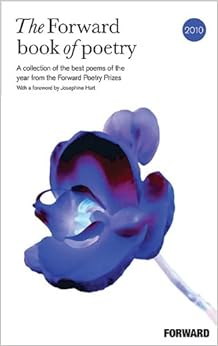
The Forward Book of Poetry 2010
London, Forward, 2010
The 2010 collection is larger than any other Forward Book of Poetry - it contains some of the longest poems I have read in all the anthologies. But it also consists of a wide variety of subjects and forms, and every poems has memorable images and lines.
I am starting to see familiar names recurring in the collections I have been reading - the more you read, the more you know. I was delighted to see Hugo Williams in the 2010 collection - his 'Poems to My Mother' are warm and honest, consistent with his work I have read elsewhere.
Family is a theme that repeatedly comes up in poetry, but none more so than in this collection. It was presented in so many forms - from admiration to anger, tragedy to humour. Many seemed to be saying good bye, such as Christopher James' heart-breaking thoughts on his father. The words portray the individual poet's battles with their relationships; in particular, the darkness of Brian Henry's 'Quarantine' still haunts me.
War and terror seemed to frequently be explored - even ten years after 9/11, the images of this tragedy remain on the minds of the writers. Clive James' ability to find a dark sort of humour in this subject demonstrates the zanity with which terrorism is thought.
Alongside these are reflections on opportunities missed and lives not fulfilled. Roger McGough, a writer I normally associate with humour, declares, "We didn't make our beds, but we lie in them." And Kevin Hart muses over what life could have been like had he taken a different path.
Many different styles were on show in this collection - from structure, rhyming poems to those without punctuation and correct grammar. In places, words seemed to be thrown at random upon the page, until closer reading revealed love or hope or longing.
The ones I loved the most, as per usual, were those written by women, typically about relationships. The 2010 collection gave me a great selection to choose from, including Lorraine Mariner and Selima Hill, aforementioned favourites. But this collection iintroduced me to Tamsin Kendrick, whose weighing up of 'Peter Pan vs Captain Hook' forces you to reflect on your ideal man; especially when paired with Katy Evans-Bush's 'To My Next Lover', which immediately made me go away and write.
What more can you ask of a collection of poetry?
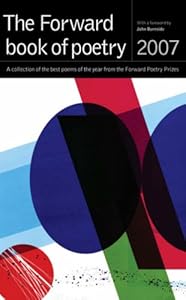
The Forward Book of Poetry 2007
London, Forward, 2006
2007 appears to have been the year of the incredibly long poem, and yet this collection is surprisingly short. As John Burnside notes in his foreword, the judges of 2007 selected six finalists for each category, instead of the usual five. But the selection of Highly Commended Poems is shorter than usual, and this is where I found the real gems.
This collection covers as wide a range of themes as any of the Forward Arts Foundation books, but there seems to be a heavier leaning towards poems about the labouring classes than usual, from forestry to mining and beyond.
Then, there are brilliant accounts of fantasy like Tim Wells' 'On Being Expelled from Eton for Shagging Tallulah Bankhead', which imagines a world in which a working class boy could go to an establishment school.
Although many of these poems are rather longer than I typically prefer, there are some excellent examples of experimentation with form, including Allan Crosbie's 'Manifesto', the power of which is so difficult to articulate - you will simply have to read it yourself to believe it.
But I think my favourite is 'Bird' by Clare Shaw - somewhat unexpectedly, as I am not the kind of person who likes stories about animals; I have always responded better to human pain and success. But 'Bird' is so beautifully written, so delicate and innocent, that I could not help but love it.
Ours Are the Streets
Sunjeev Sahota
London, Macmillan, 2011, 313p
Ours Are the Streets is the story of a young man's journey to extremism. Imtiaz begins writing his story so that his daughter and wife will remember him, and tells the reader about how he met his wife, Bekah. At university in Sheffield, they become lovers, and an unexpected pregnancy results in marriage. Bekah agrees to convert to Islam for Imtiaz, and despite the challenges of their youth, they are happy.
When Imtiaz' father passes away, he travels to Lahore with his mother to bury him. At first, it feels odd to adjust to this place where everyone seems to know him, even though he has never given them a moments thought. But he remains an outsider, a foreigner, his light skin and accent giving away his British-ness.
As he starts to make friends, he settles into this place as 'home', but their travels deep into Afghanistan change the man who left England not so long ago.
Ours Are the Streets is a dark, tragic novel. From the earliest pages, you are aware something has gone wrong - Imtiaz shouldn't be writing letters for his daughter to remember him, and it soon becomes clear where he is going.
I found Imtiaz' transformation to be somewhat oversimplified. He doesn't seems dissatisfied with England; not even when he finds himself having to justify the West to his new friends in Pakistan. He comes to enjoy the feeling of being part of something in Afghanistan, though it was unclear that he felt disengaged when he was in Sheffield. And his 'decline' into extremism is articulated through paranoid rantings, which I felt belittled his decision to become a fighter.
I am not convinced that this novel is the most reliable and straightforward exploration of a young man's transition into a potential terrorist, but Sahota's novel is a bold, gripping story that I would definitely recommend.
We Are All Completely Beside Ourselves
Karen Jay Fowler
London, Serpents Tale, 2013, 308p
Last week, just before the winner of the Man Booker Prize was announced, the OSA staff book club met for ice cream and a discussion about one of the shortlisted books.
We Are All Completely Beside Ourselves is a very unusual novel. Before reading it, I knew there was a twist, but not what that twist was (I love that avid readers do not share plot spoilers with each other, and will strive to continue that here).
The narrator is Rosemary, who commences her story at the midpoint. Having been a talkative child, she has learnt to start in the middle; but her story jumps back and forth so that it slowly reveals itself over time. As an adult, she confesses to being a lot more thoughtful and quiet than she was as a child, and that may be because she has not seen her brother or her sister for many years. Instead, she has carried the burden of her parent's loss (the details of said "loss" not being immediately explained), and has become an introverted young woman.
Rosemary admits to being a biased and potentially unreliable narrator. She notes that,
"An off-told story is like a photograph in a family album. Eventually it replaces the moment it was meant to capture."
As the novel progresses, it becomes clear that her childhood memories are not the same as her parent's maturer adult experiences. But the profound effect of her upbringing is clear in her adult life.
Parts of this novel reminded me of William Fiennes, who writes autobiographical accounts with extracts of scientific information, about birds or epilepsy. Towards the end of We Are Completely Beside Ourselves, Karen Jay Fowler talks increasingly about animal rights; though in our book club, we felt there were a few too many inconsistencies between Rosemary's account of her experiences and her examples of cruelty to animals.
One of our book club members managed to read the book twice, and said it revealed much more on a second reading. I enjoyed the experience of reading We Are Completely Beside Ourselves, but I am not sure if there were too many coincidences for my liking.
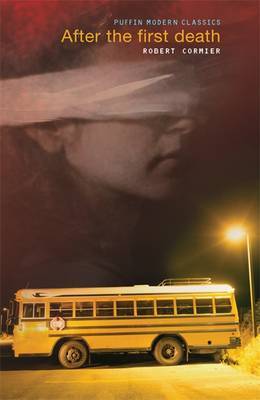
After the First Death
Robert Cormier
London, Puffin, 2006, 275p
After the First Death begins with a narration from Ben, a young boy haunted by an incident we do not yet know much about, except that it has left him with a scar from a bullet wound and it has shattered the already fragile relationship he has with his father. With time, his monologue is augmented with the voices of two others involved in this fateful day - Kate, a girl held hostage on a bus full of children, willing herself to be brave enough to act; and Miro, following the commands of a man he reveres, recounting how it came to be that he
The novel is emotive and tense - all of the action unfolds over a relatively short space of time, as we are drip fed details, unraveling the truth. The story focuses upon the thoughts and feelings of these three characters. Kate and Miro are battling to stay alive in the moment of the action, and Ben, place between the military and the terrorists, tells of the aftermath of the kidnapping.
Particularly interesting is Miro's story. He seems strangely innocent, even though he is involved with the 'terrorist' group of the story. Even Kate feels pity for him, as he tells his story, though her feelings are conflicted with the anger she feels towards her captor.
It wasn't until I was halfway through the book that I realised this novel had been first published in 1979. This new knowledge added an incredibly dark slant to my reading of it - the realisation that a book written twenty five years ago could still feel so timely and current. Although the development of the character's internal identities are detailed and vivid, their physical appearances are left unspecified. As such, Miro and Artkin, with their made up names, are not linked to a specific race or nation or conflict. The fictional events of this story could be seen as a telling of many real situations, and a reader today, in the context of the current political climate, can relate as easily as a reader from twenty five years ago.
It is terrifying that this book felt so plausible, and has felt this real for so long. But Cormier's exploration of the three sides to this story packs a powerful punch, illustrating how victimization and innocence subjective.
Breathe
Sarah Crossan
London, Bloomsbury, 2012, 371p
I have been trying to read this for the last few days, with little success. I am unsure if it is because it is the holidays and I have switched off, or because the book isn't all I wanted it to be, but I have not gotten very far.
One hundred pages in, the characters are introduced and the plot is established, but I am not gripped. Alina, part of a rebel group, is forced to escape the city in which she has always lived. Here, oxygen is a gift, divided according to a strict social divide, which leaves many without enough air to lead a normal life. The state is catching up with the rebel group, and Alina must get away. On the city borders, she is helped by a Premium boy, one of the rich and fortunate, and together they escape into the unknown outside the Pod.
Already, the path of their story seems clear, paralleling many of the tropes of the multitude of other dystopian novels currently available. On reading the blurb, I loved the concept of this novel, but the initial pace felt slow and I could not engage with the characters and their trials.
Perhaps I just need a holiday and will return to it in the future.

Siege
Sarah Mussi
London, Hachette, 2013, 307p
I encountered Sarah Mussi last week at the SLA Conference in Manchester, where she discussed with a panel of writers the concept of the dystopian novel. It was an enlightening 'author meet' for two reasons: partly because it introduced me to some new YA novels; but mainly due to the exploration of the definition of dystopian fiction - how does it differ from science fiction?; does the ending need to leave the reader with hope?; how close to our contemporary reality are some of these dystopian worlds?
Siege has been sat on my To Read shelf at work for months - it is a big shelf, and I with brilliant new novels arriving every day, sometimes books sit there for rather too long. Finally, meeting Mussi prompted me to pick up this novel and explore what had intrigued me in the first place.
A group of teenagers, calling themselves the Eternal Knights, have taken the YOU OP 78 Academy hostage. Fighting for her life, Leah has taken refuge in the ceilings, but she knows she cannot survive up there for long. The school is on Lock Down - no one can get in or out - and the battery of her comm (phone) is running low, leaving any attempts to make contact with the world outside futile.
Siege is a gripping, dangerous novel, and Leah is a strong, independent protagonist. Even though a male counterpart is introduced, leaving potential for a romance, most of the novel consists of Leah alone, trying to survive and striving to save her peers.
Much of her battle comes from her guilt - she is scared her brother, Connor, might be involved, and wonders if she could have done more to prevent this. But as time goes on, Leah realises that there is more to this siege than the failed relationship between herself and her brother - there are bigger factors at play.
Sarah Mussi's dystopian world (if I can call it that) is not far from the world in which we live. Leah and the students at her school are considered to be a drain on society - they are rushed through their education and forced into Volunteer Programs, in the hope that they can give something back and reduce their detrimental impact upon the country's resources. There is no social mobility - the lives of the students at these academies are set in stone.
No wonder this siege has come about, Leah thinks. The youth are disillusioned and angry, so they take up weapons to fight for their rights. But it seems weird to Leah that these Eternal Knights are made up of some of the most stupid kids in school - kids who couldn't track down weapons or organise themselves this efficiently. So there must be some bigger power involved...
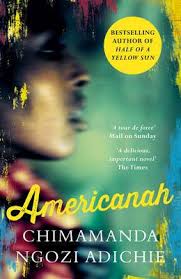
Americanah
Chimamanda Ngozi Adichie
London, HarperCollins, 2013, 477p
Having grown up in Nigeria, Ifemelu has a fascinating outlook on life in America. She first moved there for university, and over the years, struggles through relative poverty to eventually achieve success with a blog in which she writes about race from the perspective of a 'non-American black'.
Meanwhile, in Nigeria, her high school boyfriend, Obinze, has become a wealthy business man, despite a short illegal stint in England. After many years apart, Ifemelu starts to wonder about Obinze, and when she decides to move back to Nigeria, she gets in touch with him. Americanah tells of their lives during the years spent apart, and builds towards a reunion that is perhaps not as simple as either would have wished.
Although sold as a love story, Americanah is about so much more than this couple's romance. A large chunk of the novel is dedicated to Ifemelu's observations about race in the USA, highlighting how complicated and unconsciously embedded racism is, and exploring the relationships between different minority groups. This is what I found most gripping - the social commentary about the way race and racism is percieved by the people who are most subject to it. Some of her thoughts made me cringe, embarassed that anyone could ever say or act in such a way; whilst other passages made me reflect on myself and my behaviours, wondering if I had made such ignorant mistakes. And, equally fascinating as her experiences in America were her experiences on returning to Nigeria having been away for so long, faced with a new, different sort of prejudice.
But in becomming enthralled by Ifemelu's commentary, I found myself attached to the character, willing her relationship with Obinze to succeed. Yet, for me, the romance pales in comparison to the story of their journey to the point of reunion.
I love Adichie's style of writing - it is direct and clear, and she effectively balances the voices of Obinze and Ifemelu, allowing both to tell their own stories through an omniscient third person narrative. Her novels are long (and I cannot wait to read another), but they do not feel heavy or difficult; instead, they are a delightful breeze on which to float.
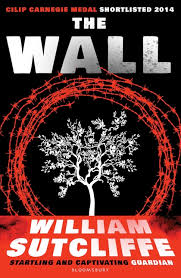
The Wall
William Sutcliffe
London, Bloomsbury, 2014, 286p
I have been very slow about making my way through the Carnegie shortlist this year, but have stepped up my game this half term with The Wall.
Joshua has lived alongside the wall for many years, with a vague awareness of what might be on the other side. One day, he discovers a tunnel that leads to the other side, a forbidden territory for people from his side of the wall. There, he finds terror, violence, and kindness, and his newfound knowledge changes his life forever.
The Wall is a dark, dangerous novel about segregation. Sutcliffe has created a ficitonal world losely based on the Israeli settlements on the West Bank, and he explores the issue of racial prejudice that is ingrained in this and so many other areas.
The journey of discovery that Joshua embarks upon is full of danger and pulls his already fragile family unit apart. Joshua's father passed away in a military incident relating to the wall, and his stepfather is a brute, angry force. Joshua tries to bridge the gap through helping those who showed him kindness, but is simply punished and rebuked by his family. Those on his side of the wall are protected from the dangers and repression, but what he sees when he discovers the tunnel can never be unseen.
To see the rest of my Carnegie reviews, click here.
Transformatrix
Patience Agbabi
Edinburgh, Payback, 2000, 78p
No poet packs such a punch as Patience Agbabi. From the opening line of this collection, she calls her reader to battle, seeps rhythm through their bones, and empowers one to be strong.
Transformatrix contains a series of poems designed for performance - reading them in your head is not good enough. They are written to be shouted and sung, with unusual rhythm and unconventional rhyme that only reveals itself through the spoken word.
The collection explores Agbabi's observations about contemporary society - about race, poverty, femininity and sexuality. Some are funny and some are angry, but all are passionate.
The first poem is one of my favourites - 'Prologue'. As with a novel, the first line of a poetry anthology should grip you and make you want to read more, and with 'Prologue', Agbabi has written a poem full of pizzaz and joy. To read it aloud, you can indulge in the magic of language as the words roll off your tongue, each carefully crafted and executed. You can feel the influence of British music and culture,
The book is broken down into sections; the focus of many being women - powerful women, subordinated women, women in love. Each little poem tells it's own story, and when collected together in sections, each part of the book tells a wider story. As a whole, Transformatrix is uplifting, exciting and invigorating.
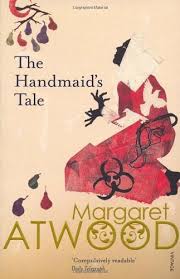
The Handmaid's Tale
Margaret Atwood
London, Vintage, 1985, 324p
This is one of those books I have been meaning to read for a long time - the kind of book my non-librarian friends condemn me for not having read. But at last, I can stop feeling guilty - instead, I now feel haunted by one of the darkest novels I have ever read.
In the Republic of Gilead, the roles of all are clearly defined by a strict social structure. Commanders and their wives occupy places of power, served by Marthas and Handmaids. Any rebels are swiftly removed from society, the punishment typically being death. Offred is a Handmaid, and her role is to enable procreation - she's are subject to harsh rules about sexuality and sensuality, dressed always in long dark robes.
But a repressive state does not prevent Offred of dreaming of her past and hoping for the future. She had a child, once, and a husband, and longs to be reunited with them; but fear is a powerful deterrent.
Margaret Atwood defines her writing as speculative fiction, as, unlike science fiction, the world she creates could really happen. As Offred describes, the transition from the contemporary society in which her reader lives into the Republic was slow and smooth, beginning with identity cards and scienfitic developments in relation to DNA. As such, the world Atwood has created is plausible, it could become our reality in the future.
The Handmaid's Tale is a sharp, perceptive novel about structures of power in modern America. Atwood explores issues of sexuality and desire, highlighting the impossibility of a 'moral' state, in part due to the complexity of defining what is moral. Her prose is incredibly witty and readable, drawing you into Offred's world and haunting you with the possibility of this dark, repressive future - and slowly revealing how it came to be.
Stormclouds
Brian Gallagher
Dublin, O'Brien, 2013, 218p
I don't know a lot about the conflict in Ireland over the last fifty years, and am always surprised at the lack of teaching of this subject. Fortunately, we librarians can always count on engaging and fact-based fiction to teach teenagers a little about the things they don't learn in the classroom.
In the 1960's, conflict between the loyalists and nationalists is rife. Emma and Dylan move to Belfast because their father, a journalist, has been sent there to report on current events. They are sociable and outgoing kids, so unsurprisingly make friends quickly. Emma meets Maeve at her running club, while Dylan meets Sammy at football. When the siblings bring their new friends together, they find that both have deep-seated suspicions about each other: Maeve is from a Catholic nationalist background, whereas Sammy is a Protestant unionist. With time, they begin to realise that they aren't that different after all; but the rest of Belfast are not so quick to change their views, and conflict breaks out across the city.
Stormclouds has a clever moral message about prejudice and difference: the children put the adults to shame with their ability to see past religion and politics. The brash aggressiveness that leads to street warfare is distressing, especially when contrasted to the friends' open mindedness and love for one another. This is a brilliant, gripping book, teaching it's young audience about an important and ongoing political conflict.
Sweet Tooth
Ian McEwan
London, Vintage, 2012, 370p
Due to high demand amongst staff at my school, a colleague and I are establishing a staff book club, starting with Ian McEwan's Sweet Tooth.
Although McEwan has a tendency to be incredibly tough on his protagonists, I like his writing. He is gritty, getting right into the minds of his characters. They are not flawless objects you cannot believe in, but detailed and flawed individuals who often cause their own demise.
Serena Frome is no exception. She is an attractive, intelligent young woman, fresh out of Cambridge, when she is spotted by MI5. She is recruited for operation Sweet Tooth, a project to mould the face of British culture through supporting writers who reflect the government's desired national mood. It is 1972 and society is in a difficult place, with the Provisional IRA threatening terrorism, workers going on strike, and the Cold War hanging over Europe. Serena is told to manage Tom Haley, an English professor who has shown an aptitude for writing what MI5 want to see. She admires his work, and when she meets him, falls for the man himself.
This novel did not unfold in the manner I had expected. The blurb is enough to make you anticipate fast-paced action, but the drama occurs in a rather more leisurely manner. The reader is aware that Serena is doomed from the beginning, unable to tell Tom who she really works for. The secret builds between them as they become closer and closer, threatening to unravel their peaceful seaside idyll.
And yet, I hugely sympathised with Serena. It might have been her unadulterated love of reading or her misguided approach to romance, but despite her being incredibly different from me, I related to her feelings. This is where I think McEwan is highly skilled: he gets right into the subconscious of his characters, breaking down their motives and movements so that the reader becomes in tune with the protagonist, and you start to believe you might have acted exactly as they did.
I am really looking forward to discussing this novel with my colleagues and friends - even if we conflict, I love exploring a novel through someone else's eyes.
Noble Conflict
Malorie Blackman
London, Random House, 2013, 357p
Words fail me when I try to describe how much I adore this novel. Malorie Blackman is best known for her Noughts and Crosses series, but this novel is what truly shows how talented and engaging she is.
Kaspar is a Guardian of the Alliance. His job is to defend civilians from Insurgents, the dangerous enemy intent on disrupting the peace of his society. Years ago, the Insurgents damaged the earth through experimentation, forcing the Alliance to segregate them. Now, the Insurgents are a constant threat, and the Alliance must fight defend, but aim to avoid causing any death.
But Kaspar starts to question what he has always believed to be true. With the aid of Mac, a kick-ass librarian, he delves deeper into the history of the Alliance and the integrity of some of the recent attacks, revealing some disturbing information.
Noble Conflict is an intelligent, thrilling read. Blackman does not patronise her reader, but challenges you to keep up with her. Her dystopia is complicated and thought-provoking - like Kaspar, I found myself stating to question what I knew about the society in which I live.
The action throughout this novel is brilliantly controlled and executed. From page one, you are gripped, as the Insurgents attack an Alliance ceremony. Each moment reveals a little more of the mystery to you, and you cannot help but read on! I can't pretend that I didn't guess the ending before it happened (I tend to do that a lot), but it made no dent in my enjoyment of the story.
Most of all, I love the characters in this novel. Kaspar is a dream protagonist - loyal, handsome, clever and a brilliant fighter. He has great friends, each of whom seem incredibly real and wonderful despite not being a significant element in the novel. But best of all are the female leads - Rhea and Mac. You barely get to know Rhea - she is doused in mystery, temptingly dangled in front of you and never fully revealing herself - but she is brave and feisty and passionate, providing Kaspar with the motivation to discover the truth. Meanwhile, Mac provides him with the resources to learn more. As a librarian, she is a credit to our trade. She never falters, she's smart, confident and driven; she is a perfect counterpart to balance Kaspar's fiery masculinity. And the tools she has to carry out research are genius - I wish I had little bots I could program to trawl cyberspace for information.
Plus, she gets the best line of the whole novel:
"Books and knowledge don't make for a safe world. Just the opposite. Books and knowledge are facets of truth and the truth can be very dangerous."
It is not completely clear if Blackman has a sequel in mind for this one, but I would love to read more about this world!
The Things We Did For Love
Natasha Farrant
London, Faber, 2012, 224p
The climax of this book was one of the most heart-breaking pieces of literature I have ever had to read. Based on true events during the Second World War, The Things We Did For Love unexpectedly transformed from a sweet love story to a tragic tale of brute violence.
Ari and Luc are sweethearts living in a small village in France during the Nazi occupation. Luc is unsettled, angry at what is going on around him, as minorities and rebels are being turned over to the Germans. He thinks he might be able to help if he joins the Resistance. But Ari fears he will only get hurt, and is convinced that their love can overcome his desire to leave.
The romance was not my favourite part of this novel - I am not a fan of the 'love overcomes all' plot where people sacrifice their beliefs for their lover. Luc was a passionate hero, guided by his morals and willing to give up his life for the cause. But Ari was a draining heroine - I felt like she was holding him back.
But it was not these two characters who make this novel great; instead it was the supporting cast. Ari's cousin, Solange, and her brother, Paul; Romy, the boy who has loved Ari for as long as he can remember, trying to do right by her; and the German officers, sent to commit the worst of atrocities and always carrying the weight of self-doubt and guilt.
Most powerful of all was the ending of this novel. Farrant writes in her afterword that this story is based on true events: on 10th june 1944, the 2nd SS Panzer Division Das Reich entered the village of Oradour-sur-Glane and massacred it's occupants. Innocent men, women and children were slaughtered in the most horrifying of circumstances. Today, the town remains empty, haunted by it's tragic past.
Whether you like historical fiction or teenage romance, this novel has a beautifully dark story to tell, one that will make you ponder long after you have finished the final page.
Be Awesome
Hadley Freeman
London, HarperCollins, 2013, 266p
I have been reluctant to finish this book - I wanted it to go on forever. But even the best things must eventually come to an end. I just wish Hadley Freeman was my friend.
Be Awesome is a bold, bright guide to life for intelligent, modern women. Freeman discusses fashion, culture and society, listing her ten favourite books and offering answers to all your dating woes. Her message is to be true to yourself and she gently coaxes you, the reader, to realise you are awesome.
This book is unashamedly feminist. Today, feminism seems to be getting a bad reputation and few women want to associate themselves with this label. As Hadley notes, this is madness. Feminism is about equality: it is about variety and identity. For both men and women, it is about being brave enough to be who you want to be and/or who you are: it is no more about hiding behind gender stereotypes or being ashamed of success than it is about bra burning or acting 'masculine'.
I have often found myself frustrated by some of the issues explored in this book and unable to explain why. If everyone read Be Awesome, they might have a better understanding of some of the things in my head. Like why do women over-analyse dates and relationships, trying to decipher the meanings of their companions every word and action? Why does it matter so much? The important thing is whether you like him, surely? And why do some newspapers simultaneously chastise one celebrity for being too thin whilst another is too fat. And why do so many movies contain nameless, personality-free female characters who only ever chat about men; unless the female is the protagonist, in which case she will only find "happiness" when she settles down to marry and have children in suburbia. Because of course we could never have it all!
There is so much to admire
about this book and it's author: from the witty tone to the intelligent
approach to every tiny detail. It is honest and observant, and I found
it perfectly expresses so many of issues I struggle to articulate, including why Persuasion is one of the best novels ever written.
Also, there are references to The Princess Bride throughout - who doesn't love the Dread Pirate Roberts?
This blog post is preemptively dedicated to all the people to whom I will recommend this book for the rest of my life, starting with award-winning Esme.