Slated
Teri Terry
London, Orchard, 2012, 439p
I am concerned that I am going through a reluctant reader phase. By this, I mean that I am struggling to engage with many books - I only seem to be satisfied reading poetry and a little adult fiction - so I apologise that my blog has not had much variety recently.
In an attempt to get out of this funk, I started Slated before the weekend. Kyla's memory has been wiped. She lives in a society where individuals who conflict with the law have their memories removed, and are given a second chance. Kyla is only sixteen, but the government claims she was a terrorist. She struggles to relearn the basics, like tying shoe laces and crossing the road. But she loves art, and through her drawing, she can put her nightmares on paper and hopefully find some answers.
This book has sat on my dresser for several days, and I have made little progress. It takes a lot to make me give up on a book, but the pace of Slated was too slow for my liking, especially as there are two sequels. Like many dystopian novels, I like the concept - the idea that nothing is what as it seems, and Kyla must struggle to uncover the truth. Unfortunately, I think there have been so many novels of this vein recently that I can probably predict exactly what is going to happen - the lack of intrigue meant I eventually had to concede defeat and try something new, in the hope of moving on from this rut of being unable to read any teen or YA fiction.
Ours Are the Streets
Sunjeev Sahota
London, Macmillan, 2011, 313p
Ours Are the Streets is the story of a young man's journey to extremism. Imtiaz begins writing his story so that his daughter and wife will remember him, and tells the reader about how he met his wife, Bekah. At university in Sheffield, they become lovers, and an unexpected pregnancy results in marriage. Bekah agrees to convert to Islam for Imtiaz, and despite the challenges of their youth, they are happy.
When Imtiaz' father passes away, he travels to Lahore with his mother to bury him. At first, it feels odd to adjust to this place where everyone seems to know him, even though he has never given them a moments thought. But he remains an outsider, a foreigner, his light skin and accent giving away his British-ness.
As he starts to make friends, he settles into this place as 'home', but their travels deep into Afghanistan change the man who left England not so long ago.
Ours Are the Streets is a dark, tragic novel. From the earliest pages, you are aware something has gone wrong - Imtiaz shouldn't be writing letters for his daughter to remember him, and it soon becomes clear where he is going.
I found Imtiaz' transformation to be somewhat oversimplified. He doesn't seems dissatisfied with England; not even when he finds himself having to justify the West to his new friends in Pakistan. He comes to enjoy the feeling of being part of something in Afghanistan, though it was unclear that he felt disengaged when he was in Sheffield. And his 'decline' into extremism is articulated through paranoid rantings, which I felt belittled his decision to become a fighter.
I am not convinced that this novel is the most reliable and straightforward exploration of a young man's transition into a potential terrorist, but Sahota's novel is a bold, gripping story that I would definitely recommend.
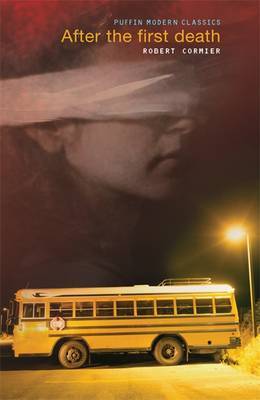
After the First Death
Robert Cormier
London, Puffin, 2006, 275p
After the First Death begins with a narration from Ben, a young boy haunted by an incident we do not yet know much about, except that it has left him with a scar from a bullet wound and it has shattered the already fragile relationship he has with his father. With time, his monologue is augmented with the voices of two others involved in this fateful day - Kate, a girl held hostage on a bus full of children, willing herself to be brave enough to act; and Miro, following the commands of a man he reveres, recounting how it came to be that he
The novel is emotive and tense - all of the action unfolds over a relatively short space of time, as we are drip fed details, unraveling the truth. The story focuses upon the thoughts and feelings of these three characters. Kate and Miro are battling to stay alive in the moment of the action, and Ben, place between the military and the terrorists, tells of the aftermath of the kidnapping.
Particularly interesting is Miro's story. He seems strangely innocent, even though he is involved with the 'terrorist' group of the story. Even Kate feels pity for him, as he tells his story, though her feelings are conflicted with the anger she feels towards her captor.
It wasn't until I was halfway through the book that I realised this novel had been first published in 1979. This new knowledge added an incredibly dark slant to my reading of it - the realisation that a book written twenty five years ago could still feel so timely and current. Although the development of the character's internal identities are detailed and vivid, their physical appearances are left unspecified. As such, Miro and Artkin, with their made up names, are not linked to a specific race or nation or conflict. The fictional events of this story could be seen as a telling of many real situations, and a reader today, in the context of the current political climate, can relate as easily as a reader from twenty five years ago.
It is terrifying that this book felt so plausible, and has felt this real for so long. But Cormier's exploration of the three sides to this story packs a powerful punch, illustrating how victimization and innocence subjective.
Stormclouds
Brian Gallagher
Dublin, O'Brien, 2013, 218p
I don't know a lot about the conflict in Ireland over the last fifty years, and am always surprised at the lack of teaching of this subject. Fortunately, we librarians can always count on engaging and fact-based fiction to teach teenagers a little about the things they don't learn in the classroom.
In the 1960's, conflict between the loyalists and nationalists is rife. Emma and Dylan move to Belfast because their father, a journalist, has been sent there to report on current events. They are sociable and outgoing kids, so unsurprisingly make friends quickly. Emma meets Maeve at her running club, while Dylan meets Sammy at football. When the siblings bring their new friends together, they find that both have deep-seated suspicions about each other: Maeve is from a Catholic nationalist background, whereas Sammy is a Protestant unionist. With time, they begin to realise that they aren't that different after all; but the rest of Belfast are not so quick to change their views, and conflict breaks out across the city.
Stormclouds has a clever moral message about prejudice and difference: the children put the adults to shame with their ability to see past religion and politics. The brash aggressiveness that leads to street warfare is distressing, especially when contrasted to the friends' open mindedness and love for one another. This is a brilliant, gripping book, teaching it's young audience about an important and ongoing political conflict.
My Sister Lives on the Mantelpiece
Annabel Pitcher
London, Indigo, 2011, 221p
Some characters are just too wonderful for words. The first person narrative becomes incredibly powerful, inviting the reader into a vivid world full of love and curiosity and doubt. This is Jamie.
My Sister Lives on the Mantelpiece is a story about a family coming to terms with loss. Five years ago, Rose died in a terrorist attack. Her father turns to alcohol, whilst her mother leaves for another man. Her twin sister has to step up, always living under the shadow of the ashes that sit on the mantelpiece. But Jamie can't really remember his lost sister. And when he becomes friends from Sunya, he feels like he is betraying his father by spending time with a Muslim.
Written from Jamie's point of view, the narrative is full of naivety and uncertainty. The language is simplistic and emotional, with long child-like sentences. This style really lends itself to creativity, as the imagery is beautifully poetic - particularly memorable is his descriptions of the few strands of hair that escape Sunya's hijab, billowing in the wind.
The relationships that are developed in this book were my highlight. The broken family with their lack of understanding for each other was full of sadness. Even though you want to hate the parents, Pitcher has made them so terribly human, full of flaws, that you can't help but sympathise. Jas and Jamie are incredibly patient as they struggle to keep their heads up, despite their parents being absent from their day-to-day lives.
But best of all is the friendship between Jamie and Sunya - their secretive codes and superhero tendencies make them adorable. Where so many young characters strive to fit in, Sunya and Jamie are more than happy being the misfits.
This is a heart-breaking story - the tragedy of this family conflicts with the optimism of young Jamie, which is slowly worn away by repeated betrayal and abandonment. The children are the hero of this story, with the bravery to show their parents and teachers what is important, and how to deal with life.