To Kill a Mockingbird Harper Lee London, Arrow, 1997, 309p I first read To Kill a Mockingbird in my teens, but a few weeks ago, when I saw the 1962 movie, I realised I couldn't remember anything about the book. So, whilst I holidayed in Hamburg this week, I picked up the classic and once again sank deep into the world of Scout and Jem. Scout and Jem are adventurous and curious children, but always stay within the limitations set by their househelp, Calpurnia, and their father, Atticus Finch. When they start hanging out with a boy called Dill, the children start pushing the boundaries of the rules, and seek out to lure their reclusive and potentially dangerous neighbour, Boo Radley, from his house. Meanwhile, Atticus is involved in a controversial case in court, defending a black man against the charge of the rape of a white girl from a poor family. All through town, Jem and Scout are subject to comments from classmates and neighbours, and Scout has to work hard to control her feisty temper and keep out of trouble. The relationship between Atticus and his children is something to be admired. They adore and respect him, despite some people outside the family thinking he lets them run wild and is bringing Scout up to be less than feminine. But Atticus feels safe and comforting; he is a brilliant role model, combining the right amount of intelligence, comedy and love.
There is so much going on in To Kill a Mockingbird that I feel this blog does not give me the space to explore all the themes and storylines. I think my favourite element is Scout's narrative - young and sometimes naive, but always ready to learn and to try. She is inquisitive, always asking questions of her father that even he sometimes struggles to answer, and she loves her older brother even when he is growing into a young man and his hormones start to take over. Her world view is optimistic and vulnerable in equal measure, but through Scout, we see the evil in poverty, racism and domestic abuse, and understand how a little love can go a long way.
The London Murder Mysteries: The Montgomery Murder Cora Harrison London, Picadilly, 2010, 246p
Years of watching murder mysteries with my mother have led to a love of crime dramas. So when they are successfully created for a teenage audience, and set in Victorian London, we are onto an instant winner.
Alfie lives with his brother Sammy and his cousins in a Covent Garden cellar. They are children of the street, begging and performing tricks with their loyal dog to bring in enough for food and rent, but they are savvy and knowledgable. When a murder happens in a nearby street, Alfie is recruited by Inspector Denham to find out the talk about town and solve the mystery.
Mr Montgomery is recently returned to his wife and son from India, where he owned a tea plantation. It seems the crime was not commited for theft, as the body still has many valuables about it. The initial suspect is an Indian boy whose father was hanged for stealing - is this boy out for revenge? But could it be the wife or son, their peaceful lives disrupted by the return of their breadwinner; or even the suspicious Butler, clearly an angry and dangerous man?
The story is led by the young protagonists, who work almost completely without the support of any adults. They manage to find ways into the Montgomery household through a connection with the scullery maid, and they use their knowledge of the city to find people with the answers they need. But the children increasingly find themselves at risk, drawing attention to themselves as they poke around in other people's business, eager to discover the truth.
Cora Harrison has an easy, smooth writing style on which the reader can float along with the story. It is fast-paced and expertly plotted, leaving no opportunities for the reader to get bored with all the action that takes place. And the characters are succinctly developed, though you can tell there is more to learn about these four boys as the series progresses.
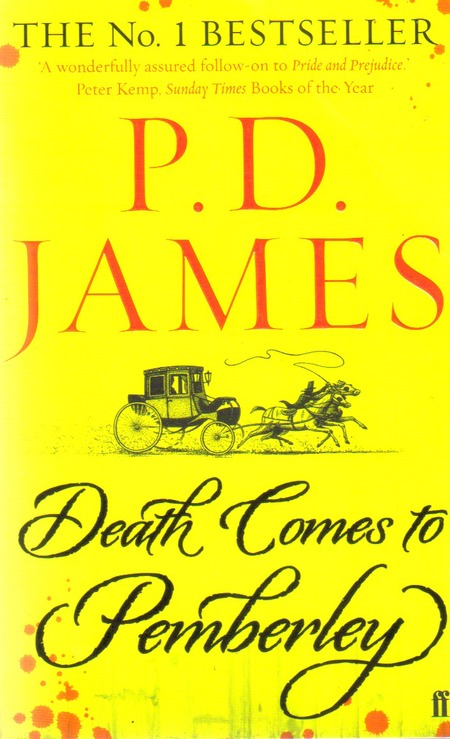
Death Comes to Pemberly P.D. James London, Faber, 2011, 324p My second piece of meta fiction in as many book reviews, but unfortunately is one was somewhat less satisfactory than the last. Eager to stick to my rule about reading the original before watching the adaptation, I wanted to read Death Comes to Pemberly before the BBC version reached my screen this Christmas, aired over three consecutive evenings. We are reunited with Janes Austen's infamous Bennett family, six years after the marriages of Darcy and Lizzie, and Jane and Bingley. The Darcys are planning the annual ball, supported by their abundant staff at Pemberly, when Lydia draws up in a carriage, declaring her husband has been murdered in the woods. Darcy sets off to find out what really happened, embroiling himself in a scandal that will dig up hidden secrets and and well-repressed feelings. As I have noted before, some meta fiction simply makes you want to repeat the original. Unfortunately, this was not one of those sequels,: although I love the concept of a murder mystery containing all my old favourites, I felt James was unable to write the see characters as well as Jane Austen once did. And now, seeing the adaptation on screen, it is clear that the concept it pure genius, mixing classic romance and drama with contemporary demand for crime fiction. In the BBC version, we are one again shown those characters we so greatly loved. Darcy is stubborn but noble, sometimes misguided in his actions but always acting with the best intentions. Lizzie is intelligent and observant, and proving to be a brilliant mother and wife. Lydia and Mrs Bennett (although not in the book) return, as hysterical and ridiculous as ever. Jane and Georgiana add a touch of feminine sensibility to the whole party, and Georgiana's suitors vie respectfully for her attention. And, to top it all off, Wickham brings drama and controversy to the peaceful existence of the Darcy home. But the book didn't bring any of this delight for me. I found the plot confusing and convoluted, unnecessarily jumping between characters, time and settings. Often, James' use of unclear pronoun was frustrating; for example she'd start a paragraph talking about two male characters, and continue the paragraph using just "he", leaving the reader confused about who was being discussed. As such, the revelation towards the end gave me no thrill, feeling instead like a necessary process I had to go through just to make it to the end. I found myself ploughing on, hoping for more, which I eventually found in the television adaptation. I think this might be the first time I've preferred the screen to the book! Hopefully, this novel will not put me off reading any P.D. James in the future.
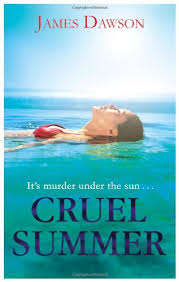
Cruel Summer James Dawson London, Orion, 2013, 321p
I have been looking forward to reading this book for months, and perhaps have waited until the wrong time of year to read about murder under the summer sun. But even whilst curled up with a wintery cold, I was transported to a Spanish villa to watch the unfurling secrets of a gang of old school friends.
One summer ago, Janey Bradshaw died on the night of her prom. Was it suicide, or did something darker happen that night? After a year apart, her friends reunite, hoping to put the past behind them and get their friendship back on track. But their secrets follow them and it soon becomes clear that some lies cannot remain buried.
Cruel Summer is a thrilling, clever novel. You are kept guessing throughout - every time you think you might have pinpointed the truth, you are made to question everything you thought you knew. The book is very easy to read, with relatable characters, light comic relief and gripping drama.
What I love most about this novel is it's self-consciousness. Writing a crime mystery has become incredibly difficult, with every reader thinking they know it all already. There are certain established tropes that often mean no story is original, and the audience knows the culprit long before the characters do. But here, Dawson employ a genius technique that keeps you unsure of yourself, questioning even the most traditional Gothic devices.
Ryan, one of the protagonists in Cruel Summer, is a drama student who adores scary films. He is a self-confessed fantasist, preferring to believe his life is part of some great television series. Much of the story is seen from his perspective, so when the criminal action begins to unfold, the reader's investigation is led by Ryan who categorises the events according to the traditions of every existing murder mystery. This explicit self-awareness lures you into a false sense of security, and so whilst Ryan distracts you with his seemingly clever and sensible deductions, James Dawson is able to create the most genius twists and turns.
Vernon God Little DBC Pierre London, Faber & Faber, 2005, 277p Over the course of the last week, I have suffered through hours and hours of waiting around for flights, trains, etc. and yet I initially struggled to engage with the story of Vernon God Little. This novel is about a teenage boy who gets caught up in a criminal investigation, and is accused of murder. Vernon's best friend, Jesus, kills himself and several of his classmates, and the police suspect another weapon might be involved. Vernon is a reserved, awkward teenager, and his fear of being accused leads to some strange behaviour, including running away to Mexico. Immediately, a man hunt is on as Vernon is accused of every crime between Texas and South America. Pierre is a very original writer, and I think it was his unique style that stumped me. (That, and the fact that I have heard such brilliant things about this book that I really wanted to love it.) The language used is fluid, often colloquial, slowly dragging you deep into the complex being that is Vernon. The plot takes some time to eek itself out, though I rather liked this element of the mysterious. Vernon insists he is innocent, but as he does not reveal anything to the reader, you find yourself torn over whether or not to believe him. Was he just in the wrong place at the wrong time? Unfortunately, the people of his home town feed off gossip like leeches, and the evidence quickly stacks up against him: drugs, dirty magazines and homosexuality are all linked to him. And yes, apparently homosexuality is enough to convince some people that a teenager is a murderer... When Vernon decides to go on the run, the pace picks up, and I found myself engrossed in this investigation, though still not convinced of Vernon's innocence; and by the end of the novel (no spoilers, I promise) I was crying! Vernon spends most of the novel unable or unwilling to take responsibility for his actions, whether or not they are correctly interpreted by society and the police. His friend, Jesus, becomes a symbol for his confusion, slowly blurring with a need for religious fulfillment. But nothing is ever as simple as Vernon wants it to be, so he must learn to exercise his own power.
Theodore Boone John Grisham London, Hodder, 2011, 263p
John Grisham writes teenage fiction! Who knew?!
Though I have to admit, I have never read any of Grisham's adult fiction.
But I loved Theodore Boone. He is a young wannabe lawyer, who gets caught up in the biggest criminal prosecution case that has ever come to his home town. It is the murder of Mrs Duffy, and her husband is the prime suspect. A few days into the trial, new evidence finds its way to Theo - he promises to protect his source, but does not know how to get his evidence noticed without breaking his promise.
Theo is well known throughout the Strattenburg courts. Both his parents are lawyers - his father in real estate and his mother in divorce - and he is friends with bailiffs, cops and judges. Whilst in eight grade, he hands out free legal advice to his classmates and teachers, and helps his Government teacher with his lesson planning.
The murder case is the talk of the town, and Theo manages to get his class front row seats. He keeps abreast of all that is happening through his connections and seems to know more about law than the lawyers. Theo is the perfect protagonist - intelligent, moral, and pretty popular, having helped almost everyone he knows with one thing or another.
I do not want to spoil the ending, so cannot give much away, but there are a lot of loose ends at the end of this novel. I know there are more novels in this series, but with so many unanswered questions, I feel this book does not stand alone very well.
Also, I would like to have seen more of April, Theo's closest friend (but not his girlfriend, Grisham is cautious to distinguish). Perhaps she will appear more in the next novel.
I would definitely recommend Theodore Boone. Although it is American, and therefore some of the legal terminology does not apply in the UK, I found everything to be explained clearly. Theo is an smart kid, and he avoids legal jargon for his young clients and readers. But most significantly, I really liked Theo. He wasn't too clever or too moral; he was normal. He felt real.